

What if the weight you can’t seem to lose isn’t a lack of willpower, but a biological signal your body is sending that it needs clinical support? You’ve likely felt the exhaustion of the yo-yo dieting cycle and the frustration of conflicting nutrition advice that never seems to stick. It’s common to feel like weight gain is a personal failure when you’re fighting against your own metabolism every single day. When you compare medical weight loss vs diet programs, the difference often comes down to addressing the root cause rather than just the symptoms.
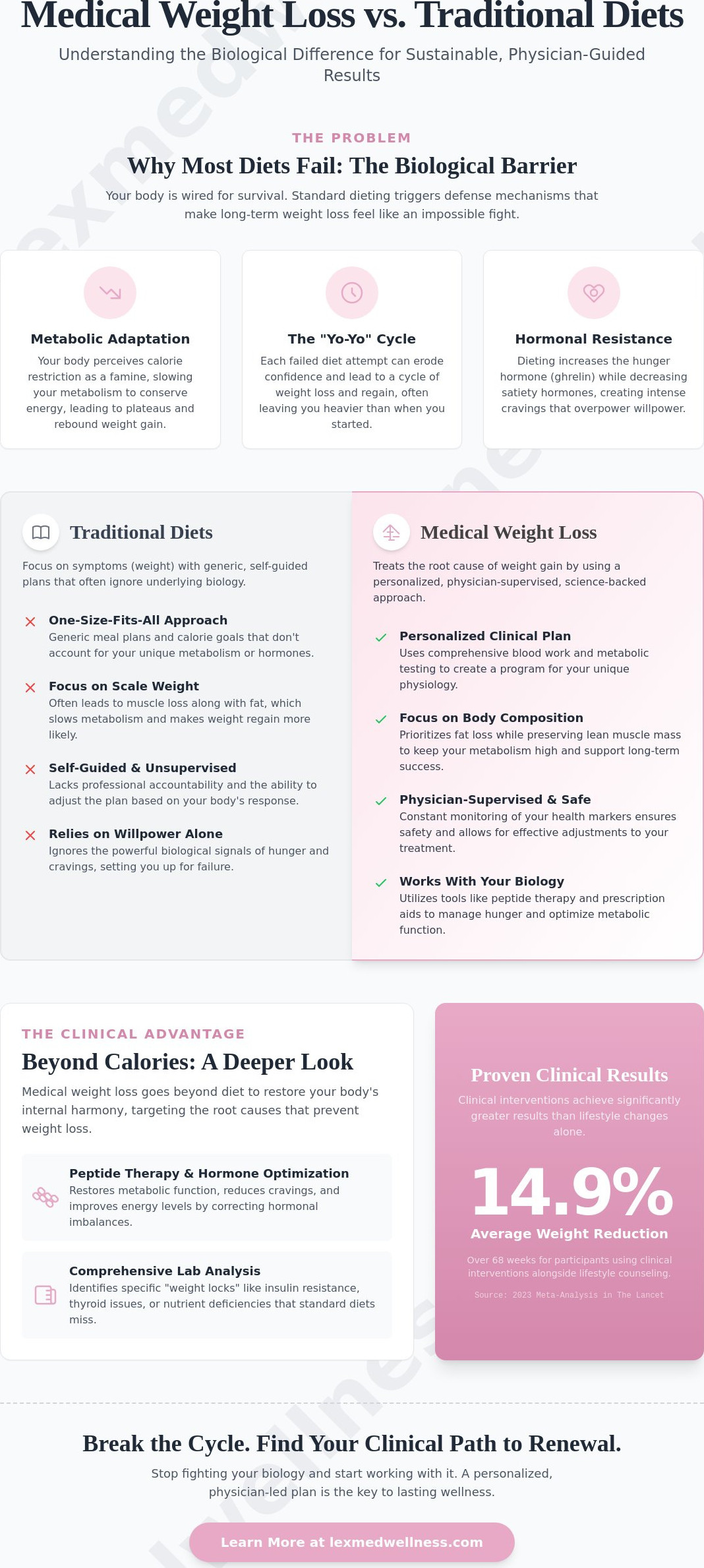
We understand that lasting results require more than just a temporary calorie deficit. According to a 2023 meta-analysis in The Lancet, participants using clinical interventions alongside lifestyle counseling achieved an average weight reduction of 14.9 percent over 68 weeks. This article will help you discover the biological differences between self-guided dieting and clinical weight loss to find the most effective solution for your body. We will explore how professional support and personalized treatments, such as peptide therapy, can revitalize your energy levels and help you achieve the sustainable maintenance you deserve. It’s time to move past the confusion and toward a clear, clinical understanding of your path to restoration.
Key Takeaways
- Understand why your body naturally resists weight loss through metabolic adaptation and how to break the cycle of yo-yo dieting for good.
- Compare the clinical advantages of medical weight loss vs diet programs to see how physician-led accountability outperforms self-guided, one-size-fits-all plans.
- Learn how comprehensive metabolic testing and blood work identify the specific biological “weight locks” that may be hindering your progress.
- Discover the role of peptide therapy and hormone optimization in restoring internal harmony and elevating your energy levels.
- Explore a structured path to personal renewal that replaces confusion with a clear, professional roadmap tailored to your unique physiology.
Why Traditional Dieting Often Fails: The Biological Barrier
Many people view weight loss as a simple math problem: eat less and move more. However, for the 70 percent of U.S. adults living with overweight or obesity, the reality is far more complex. When you compare medical weight loss vs diet programs, you see that traditional dieting often hits a wall because it ignores the body’s survival mechanisms. This wall is known as metabolic adaptation. Your body doesn’t know you’re trying to improve your health; it thinks you’re facing a famine and reacts by slowing your calorie burn to protect its energy stores.
The psychological toll of the “yo-yo” cycle is devastating. Each time the weight returns, it erodes your confidence and creates a sense of personal failure. This isn’t a character flaw. It’s a physiological response to commercial diet apps and books that treat every metabolism the same. These generic programs often overlook critical clinical factors like insulin resistance or hormonal imbalances, leaving you to fight a battle your biology is programmed to win. Effective Management of obesity requires moving beyond these one-size-fits-all solutions toward a path of individualization and comprehensive care.
The Myth of Willpower vs. Biology
Hunger isn’t just in your head. During standard calorie restriction, your levels of ghrelin, the hunger hormone, actually increase while satiety hormones drop. Your body is actively trying to push you back to its “set point,” a weight it has deemed safe. This biological protection of fat stores is why willpower eventually fails. It’s an unfair fight where your brain is constantly signaling for more energy to protect its reserves. Recognizing this biological barrier is essential for anyone choosing between medical weight loss vs diet programs.
Nutritional Gaps in Self-Guided Programs
Self-guided programs frequently focus on the scale rather than body composition. This often leads to significant muscle loss instead of fat loss, which further slows your metabolism and leaves you feeling fatigued. Counting calories is only one piece of the puzzle. Nutrient density and internal harmony are what drive long-term success. Many “health foods” marketed in commercial plans are actually processed items that can spike insulin and hinder your progress. A professional approach ensures your body receives the exact fuel it needs to thrive while shedding excess weight safely.
Defining Medical Weight Loss: A Clinical Path to Transformation
While a standard diet might tell you what to eat, a clinical program uncovers why your body holds onto weight in the first place. Medical weight loss is a physician-supervised journey that treats obesity as a complex biological condition rather than a simple lack of discipline. By targeting root causes like metabolic dysfunction and hormonal imbalances, this approach provides a foundation for lasting change that self-guided plans often lack. When evaluating medical weight loss vs diet programs, the most significant difference lies in the level of personalization and scientific rigor applied to your unique physiology.
Instead of relying solely on calorie restriction, a clinical program utilizes prescription medications for weight management as a sophisticated tool to bridge the gap between effort and results. These treatments are never a crutch; they’re a means to quiet the biological noise of hunger and stabilize your metabolism. This allows you to focus on building healthy habits without fighting your own chemistry. Our goal is to shift the focus from the number on the scale to total body composition, ensuring you lose adipose tissue while preserving vital lean muscle mass. This preservation of muscle is what keeps your metabolic rate high and prevents the rebound weight gain common in commercial programs.
The Importance of Physician Oversight
Safety and efficacy go hand in hand when you’re making significant changes to your health. A physician monitors your vitals and lab markers throughout the process, ensuring your body responds positively to the intervention. Your medical history, current medications, and genetic predispositions all influence the choice of treatments. At LexMed & Wellness, we view the provider-patient relationship as a collaborative partnership. We’re here to guide your transformation with a sense of calm assurance, making the path to medical weight loss feel both attainable and expertly managed.
Advanced Diagnostic Tools
We don’t guess when it comes to your health; we test. Advanced diagnostics like metabolic testing identify your specific caloric needs, removing the guesswork from nutrition. We also screen for thyroid and adrenal issues that often act as “weight locks,” preventing progress despite your best efforts. By identifying markers of systemic inflammation, we can tailor a plan that promotes internal harmony and peak performance. These insights allow us to build a roadmap for your renewal that is as unique as your DNA.
Medical Weight Loss vs. Diet Programs: A Side-by-Side Comparison
Choosing the right path requires understanding the fundamental differences between a temporary fix and a total lifestyle restoration. When we look at medical weight loss vs diet programs, the most striking contrast is the transition from a “one-size-fits-all” template to a highly personalized medical protocol. Traditional diets often rely on generic calorie targets found in apps or books. In contrast, a clinical program utilizes your specific metabolic rate and blood chemistry to build a plan that works with your body, not against it. This shift ensures you aren’t just following a trend but are engaging in a process designed for your unique physiology.
The tools utilized in these two paths also differ significantly. Commercial diets often push over-the-counter supplements that lack rigorous clinical backing or personalized dosing. Medical programs provide access to clinical-grade medications and peptides that are precisely managed for your needs. This shift in focus prioritizes long-term health markers, such as improved cardiovascular health and balanced blood sugar, over the fleeting aesthetic goals of a “quick fix.” While a diet might focus on how you look in the mirror next week, a medical program focuses on how your body functions for decades.
Accountability and Professional Support
The journey toward renewal is rarely a straight line. DIY diets often fail because they lack the support needed to push through inevitable plateaus. When the scale stops moving, most people feel discouraged and quit. Regular clinical check-ins prevent this by providing real-time adjustments to your protocol. Having a medical expert validate your progress and explain the “why” behind your body’s changes provides a massive psychological boost. This professional partnership helps you navigate the social and emotional hurdles of eating, transforming a lonely struggle into a guided, collaborative success. You’re no longer guessing; you’re following a proven path with an expert by your side.
Sustainability and Maintenance Strategies
Most commercial programs have an “end date,” which often triggers a return to old habits and subsequent weight regain. We replace this “finish line” mentality with a focus on permanent lifestyle restoration. A professional exit strategy is built into every medical program, ensuring your metabolism remains stable as you transition into maintenance. For many, integrating hormone replacement therapy Lexington KY can be a vital component of this long-term success. By balancing hormones like estrogen or testosterone, we help you maintain muscle mass and energy levels, making it much easier to sustain your vibrant, new state of being indefinitely. This comprehensive care ensures that the results you achieve aren’t just for now, but for the rest of your life.
Beyond Calories: The Role of Hormones and Peptides
Most people focus exclusively on the menu, yet the true drivers of weight are often found deep within your biochemistry. When you analyze medical weight loss vs diet programs, the most profound difference is the clinical attention paid to your internal signaling systems. While a standard diet ignores the chemical “weight locks” that prevent fat loss, a medical approach uses advanced treatments to restore internal harmony. Peptide therapy serves as a modern bridge in this process, offering a level of precision that calorie counting simply cannot match. These treatments don’t just mask hunger; they optimize the way your body processes energy and repairs itself.
At LexMed & Wellness, we specialize in integrating these sophisticated wellness treatments into a cohesive plan for personal renewal. We understand that your body is an interconnected system where hormones and cellular signals dictate your results. By addressing these underlying factors, we move beyond the frustration of traditional dieting and toward a state of peak performance and vitality. If you’re ready to see how a clinical approach can transform your health, explore our medical weight loss protocols today.
Hormone Optimization for Weight Management
Hormones like cortisol, estrogen, and testosterone act as the master controllers of your metabolism. When these are out of balance, your body may stubbornly cling to visceral fat regardless of how much you exercise. Estrogen dominance or low testosterone can make weight loss feel like an impossible uphill battle. Restoring these levels through hormone replacement therapy creates a powerful synergy with your weight loss efforts. This balance doesn’t just make fat loss more efficient; it revitalizes your energy levels, providing the internal drive needed to stay active and engaged with your life.
The Science of Peptide Therapy
Peptides are short chains of amino acids that act as messengers, signaling your body to perform specific biological tasks. In a clinical setting, peptides like CJC-1295 can enhance fat oxidation and improve insulin sensitivity, making it easier for your body to use stored fat for fuel. Others, such as BPC-157, are valued for their ability to support tissue repair and recovery. A critical benefit of peptide therapy is its role in preserving lean muscle mass while you’re in a caloric deficit. This preservation is vital for maintaining a high metabolic rate and ensuring your results are sustainable for the long term. By using these targeted signals, we help your body work smarter to achieve a more vibrant, balanced state.
Finding Your Path: Medical Weight Loss in Lexington, KY
Your journey toward a more vibrant self doesn’t have to be a solitary struggle against biology. The Bluegrass region is known for its rich traditions and hospitality, but these same cultural factors can sometimes make weight management feel like an uphill battle. When you’re weighing the options of medical weight loss vs diet programs, the value of a local, clinical partner becomes clear. Generic apps and national diet brands don’t understand the specific lifestyle factors that residents in Central Kentucky face. At LexMed & Wellness, Miranda Hagan and her team provide a sophisticated blend of medical authority and compassionate encouragement, ensuring you feel seen and supported throughout your transformation.
Our process is designed to be frictionless and methodical, guiding you from an initial inquiry to a concrete plan for personalized renewal. We treat your health as a collaborative journey rather than a distant service. This isn’t about a temporary fix or a restrictive “end date” mentality. It’s about a return to a more vibrant and balanced state of being. Whether you’re coming from Georgetown, Nicholasville, or right here in Lexington, LexMed & Wellness acts as your dedicated mentor, removing the confusion often associated with specialized medical treatments.
Why Local Medical Supervision Matters
Local supervision provides a level of accountability that digital programs simply can’t replicate. In-person assessments allow us to monitor your vitals and metabolic markers with precision, making real-time adjustments that ensure your safety and success. For residents in surrounding areas like Louisville and Winchester, having a central hub for wellness means professional support is always within reach. We understand the regional lifestyle factors and stressors that can impact your metabolism. This local insight allows us to tailor your plan to your actual daily life, making the path to improvement both attainable and expertly managed.
Taking the First Step Toward Renewal
Taking the first step often feels like the hardest part of the process, but we’ve designed our engagement to be as stress-free as possible. For your first consultation at LexMed & Wellness, we recommend bringing a list of current medications and any recent lab work you may have. It’s completely normal to feel anxious about starting a clinical program, especially if you’ve experienced the frustration of the yo-yo dieting cycle in the past. We’re here to replace that anxiety with a sense of hope and confidence. Our team focuses on your quality of life and the revitalization of your self, ensuring you have the energy to enjoy everything the Bluegrass has to offer. Schedule your personalized weight loss consultation at LexMed & Wellness today.
Your Path to Lasting Renewal
Achieving sustainable weight loss is a journey of biological correction rather than a test of willpower. By understanding the fundamental differences between medical weight loss vs diet programs, you can stop fighting against your own metabolism and start working with it. Lasting results come from addressing the root causes of weight gain, such as hormonal imbalances and metabolic adaptation, through a plan as unique as your own DNA.
At LexMed & Wellness, we provide board-certified family and psychiatric nurse practitioner oversight to ensure your transformation is safe and comprehensive. Our personalized plans integrate advanced hormone and peptide therapy to restore your internal harmony and peak performance. We’re proud to offer dedicated local support for the Lexington community, acting as your partner in every phase of your revitalization. It’s time to move beyond the cycle of frustration and toward a future of vibrant health. Begin your journey to sustainable health with a LexMed & Wellness consultation.
You deserve a path that respects your body’s complexity and honors your commitment to change. We’re here to guide you toward the energy and confidence you’ve been seeking.
Frequently Asked Questions
Is medical weight loss better than standard dieting for everyone?
Medical weight loss is specifically designed for individuals who face biological barriers that standard dieting cannot overcome. While traditional diets focus on willpower and generic calorie restriction, clinical programs address physiological issues like insulin resistance and metabolic adaptation. If you have struggled with the yo-yo dieting cycle or feel that your metabolism is working against you, a supervised medical approach provides the diagnostic depth necessary for a successful transformation.
How much weight can I expect to lose with a medical program?
Weight loss results are highly individualized and depend on your unique metabolic starting point and adherence to the clinical protocol. A 2023 meta-analysis published in The Lancet found that participants using clinical interventions alongside lifestyle counseling achieved an average weight reduction of 14.9 percent of their body weight over 68 weeks. Our focus remains on ensuring this weight loss consists of adipose tissue while preserving vital lean muscle mass for long-term health.
Will I need to take injections like Semaglutide to see results?
Injections are a powerful tool in our clinical toolkit, but they aren’t the only path toward restoration. We offer a variety of sophisticated interventions, including oral medications, peptide therapy, and hormone optimization, to help you achieve your goals. Your provider will collaborate with you to determine if medications like semaglutide are appropriate for your specific biology or if other wellness treatments better suit your needs and lifestyle.
Does insurance typically cover medical weight loss programs in Kentucky?
Insurance coverage for obesity pharmacotherapy remains inconsistent across Kentucky, though access is beginning to expand through new federal models. As of May 2026, the CMS BALANCE Model has launched in Medicaid to increase access to select weight loss medications. Additionally, eligible Medicare Part D beneficiaries are expected to gain access through the Medicare GLP-1 Bridge starting in July 2026. It is always best to check with your specific plan sponsor to verify your current benefits.
What is the difference between a health coach and a medical weight loss provider?
The primary difference lies in the scope of clinical authority and diagnostic capabilities. A health coach provides valuable lifestyle encouragement and accountability, but a medical weight loss provider can order comprehensive blood work, diagnose metabolic conditions, and prescribe clinical-grade medications. This medical oversight allows for a deeper exploration of your internal harmony, including hormone replacement therapy and peptide protocols that a coach cannot legally or clinically provide.
Can I participate in a medical weight loss program if I am on other medications?
Most individuals can safely participate in a clinical program while taking other medications, provided there is professional physician oversight. During your initial consultation, we conduct a thorough review of your medical history and current prescriptions to identify any potential contraindications. This careful screening ensures that your weight loss protocol works in internal harmony with your existing health regimen, prioritizing your safety throughout the journey of personal renewal.
How long does a typical medical weight loss program last?
There is no fixed “end date” for a medical program, as the focus is on permanent lifestyle restoration rather than a temporary fix. Many patients begin to see significant metabolic shifts within the first few months, but the journey continues until you reach your sustainable maintenance goals. We move at a deliberate and methodical pace, ensuring your body adapts safely while you gain the energy and confidence needed for a more vibrant life.
What happens if I hit a plateau during my medical weight loss journey?
Plateaus are a natural biological response, but they are managed with clinical precision in a supervised program. When you compare medical weight loss vs diet programs, the advantage of clinical care is the ability to adjust your protocol based on real-time data. We may modify your peptide therapy or optimize your hormone levels to overcome metabolic adaptation. This proactive approach ensures you continue moving toward your goals without the frustration and quitting often associated with self-guided diets.