

If you’ve been diligently counting calories, increasing your exercise, and trying every diet plan, yet the scale refuses to budge, you’re not alone. Many of our patients at LexMed Wellness in Lexington express this same frustration. They feel like they’re doing everything right, but their body seems to be working against them. This is often where the conversation turns from willpower to biology, and where targeted blood testing can provide crucial insights.
Weight management is far more complex than the simple “calories in, calories out” equation. Your metabolism is a sophisticated system governed by a network of hormones and biomarkers. When these systems are out of balance, even the most disciplined efforts can fall short. Comprehensive blood testing for weight loss in Lexington, KY, allows us to look under the hood, moving beyond guesswork to identify potential metabolic factors that could be hindering your progress.
Why Blood Work is a Key Step in Medical Weight Loss
For many people in Lexington and the surrounding communities of Georgetown and Nicholasville, persistent difficulty with weight loss isn’t due to a lack of effort. It can be a sign of an underlying metabolic or hormonal imbalance. A standard physical might include basic blood work, but these panels often don’t provide the detailed information needed to understand the nuances of metabolic function.
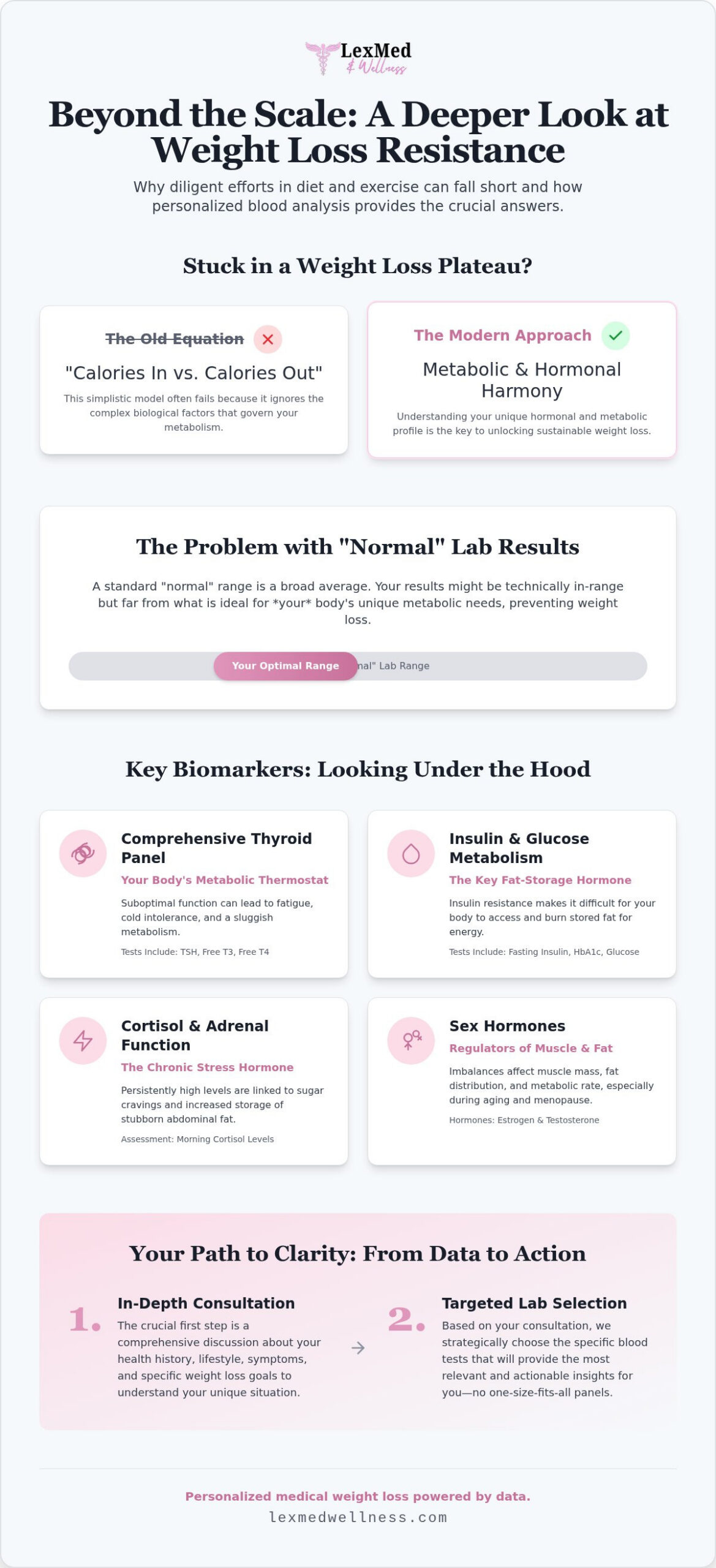
This is where we often discuss the difference between “clinically normal” and what’s right for your individual physiology. A “normal” lab range is a broad statistical average based on a large population. While it’s useful for identifying disease, it doesn’t always capture the subtle shifts that can impact your energy, body composition, and ability to lose weight. Your results might fall within that wide “normal” range, but they could be far from ideal for you, especially when considered alongside your specific symptoms and health history.
The Limitations of Dieting Without Data
A caloric deficit is a fundamental part of weight loss, but it’s only one piece of the puzzle. If hormones that regulate metabolism, appetite, and fat storage—like insulin, cortisol, or thyroid hormones—are not functioning properly, your body may be resistant to losing weight. Attempting to force weight loss through severe calorie restriction in these situations can often increase stress on the body and may even slow your metabolism further. Identifying these potential roadblocks with targeted labs is a cornerstone of a successful medical weight loss program in Lexington, KY.
The Advantage of a Diagnostic Approach
Using detailed blood work provides a clear, objective starting point. Instead of trying another generic diet, we can use your unique biological data to understand what your body needs. This information helps create a personalized roadmap that addresses the root causes of your weight management challenges. It allows us to support your body’s systems, rather than fighting against them.
Key Biomarkers: What Your Labs Can Reveal About Your Metabolism
At LexMed Wellness, we don’t believe in a one-size-fits-all lab panel. After a thorough consultation about your health history, symptoms, and goals, we select the tests that will give us the most relevant information. While every panel is individualized, some common areas we investigate include:
- Comprehensive Thyroid Panel: Your thyroid acts as your body’s metabolic thermostat. A standard screening often only looks at Thyroid-Stimulating Hormone (TSH). However, a full panel that includes Free T3 and Free T4 gives a much clearer picture of how well your body is actually producing and using thyroid hormones. A suboptimal thyroid function can lead to fatigue, cold intolerance, and a sluggish metabolism.
- Insulin and Glucose Metabolism: Insulin is a key hormone for fat storage. When your cells become less responsive to insulin (a condition known as insulin resistance), your body may produce more of it. Elevated fasting insulin levels can make it significantly more difficult for your body to access and burn stored fat for energy. We often assess markers like fasting glucose, HbA1c, and fasting insulin to evaluate your blood sugar control and insulin sensitivity. In some cases, a calculated marker called HOMA-IR can also help assess the relationship between insulin and glucose.
- Cortisol and Adrenal Function: Cortisol is a primary stress hormone. In short bursts, it’s essential for survival. However, chronic stress from work, poor sleep, or life events can lead to persistently high cortisol levels. This state is associated with cravings for high-sugar foods, increased storage of abdominal fat, and interference with other important hormones.
- Sex Hormones (Estrogen and Testosterone): Hormones like estrogen and testosterone play a critical role in muscle mass, fat distribution, and overall metabolic rate in both men and women. As we age, these hormone levels naturally decline. For women, the hormonal shifts during perimenopause and menopause can contribute to menopause weight gain, particularly around the midsection. For men experiencing symptoms of low testosterone, such as fatigue, reduced muscle mass, and weight gain, a comprehensive evaluation is key. If a deficiency is identified as part of a broader clinical picture, treatments like TRT in Lexington, KY, may be considered as part of a holistic plan.
The LexMed Wellness Process: Your Path to Clarity in Lexington
We understand that the idea of metabolic testing can feel overwhelming. Our goal at our Lexington, KY clinic is to make the process clear, supportive, and empowering. We act as your highly credentialed guide, translating complex data into a meaningful plan.
Here’s what you can expect when you partner with us for your weight loss journey:
- The Initial Consultation: This is the most important step. We sit down with you for an in-depth discussion about your health history, your weight loss experiences, your lifestyle, your current symptoms, and what you hope to achieve. This conversation guides everything that follows.
- Individualized Lab Selection: Based on our consultation, Miranda Hagan, MSN, APRN, will determine which specific blood tests are most appropriate for you. We don’t order a massive, unnecessary panel; we strategically select the labs that will provide the most actionable insights into your unique physiology.
- The Results Review: Once your results are in, we don’t just hand you a printout. We schedule a follow-up appointment to walk you through the report line by line. We explain what each marker means, where you fall on the spectrum, and how these findings connect to the symptoms you’re experiencing.
- A Personalized Treatment Plan: Armed with objective data and a deep understanding of your goals, we collaborate with you to build a personalized plan. This is not just about a prescription; it’s a comprehensive strategy that may include nutritional guidance, lifestyle adjustments, targeted supplements, and, when clinically appropriate, medical treatments.
From Data to Action: Developing Your Personalized Plan
Your lab results are the blueprint, not the final destination. The true value comes from using that data to create a sustainable, effective weight management strategy. Depending on your unique findings and clinical needs, your personalized plan may incorporate several approaches.
For instance, if your blood work and symptoms indicate a hormonal imbalance, we can discuss the risks and benefits of hormone therapy. In other cases, medical weight loss injections may be recommended to support appetite regulation and improve insulin sensitivity.
The key is that these decisions are made based on your specific biology, not a generic protocol. We also believe in ongoing partnership. As you progress, we can conduct follow-up testing to monitor your biomarkers, celebrate your achievements, and make any necessary adjustments to your plan.
Take the Next Step in Lexington, KY
If you’re tired of the frustrating cycle of dieting without results, it may be time for a different approach. Understanding your body’s unique metabolic signature is the first step toward breaking through your weight loss plateau and achieving lasting health.
At LexMed Wellness, we are committed to providing a medically sound, personalized, and supportive path to weight management for our community in Lexington. To begin identifying your metabolic roadblocks, we invite you to schedule a comprehensive medical weight loss consultation with us today.
Frequently Asked Questions About Weight Loss Blood Testing
What specific blood tests can help with weight loss?
There isn’t one single “weight loss panel,” as testing should always be individualized. However, a comprehensive evaluation often starts with a Complete Blood Count (CBC), Comprehensive Metabolic Panel (CMP), a lipid panel, and an HbA1c to assess overall health, kidney and liver function, and blood sugar control. From there, we may recommend a detailed thyroid panel (TSH, Free T3, Free T4), fasting insulin, and hormone levels (like testosterone or estrogen) based on your specific symptoms and history.
Why did my regular doctor say my labs were “normal” even though I can’t lose weight?
A “normal” or “standard” reference range is very broad and designed to catch overt disease. It’s possible to have results that are within this range but are not optimal for your body’s metabolic function. For example, your TSH might be “in range,” but if it’s on the high end and you have classic symptoms of low thyroid, it warrants a closer look. We analyze your results in the context of your symptoms and how you feel, not just against a statistical average.
Do I need to fast before my weight loss blood test?
Yes, in most cases, fasting is required for accurate metabolic testing. Tests for fasting glucose and fasting insulin require you to avoid food and drink (other than water) for at least 8-12 hours beforehand. We will provide you with specific instructions on how to prepare for your blood draw when we order your labs.
How long does it take to get blood test results for weight loss?
The turnaround time for lab results can vary depending on the specific tests ordered, but most common panels are typically available within 3 to 7 business days. Once we receive the complete report, we will contact you to schedule your follow-up consultation to review the findings in detail.
Can hormone replacement therapy (HRT) help me lose weight?
HRT is not a weight-loss drug. Its purpose is to restore deficient hormone levels to relieve symptoms like hot flashes, fatigue, poor sleep, and mood changes. However, by correcting an underlying hormonal imbalance, many patients find they have more energy for exercise, sleep better, and experience an improvement in their metabolic rate, all of which can make it easier to manage their weight as part of a comprehensive health plan.