

Perimenopause irritability can feel confusing, but you are not alone. Meditation, mindfulness, art, and gardening can offer a helpful outlet, especially alongside attention to sleep, stress, and daily routines. Irritability often shows up with hot flashes, night sweats, poor sleep, and shifting estrogen and progesterone. Many women also notice perimenopause mood swings during this time. If symptoms last or get in the way of daily life, a hormone-focused visit for perimenopause treatment can help you sort out what is going on.
When your reactions feel stronger or less predictable than usual, it can be hard to know what’s driving them. Emotional changes during perimenopause are real, and practical self-care can help you notice patterns and create space before responding.
This article looks at how hormone shifts and poor sleep may relate to irritability, which calming activities may help, and when to talk with a provider about treatment options.
Key Takeaways
- Track mood changes and possible triggers for a few weeks to notice patterns that may otherwise be easy to miss.
- Explore calming outlets such as mindfulness, creative activities, or gardening, and see which ones fit naturally into your routine.
- Pay attention to how disrupted sleep and fatigue affect your patience and emotional resilience.
- Seek medical guidance if irritability persists or interferes with daily life; care may include assessing symptoms and discussing treatment options.
Perimenopause irritability and emotional changes
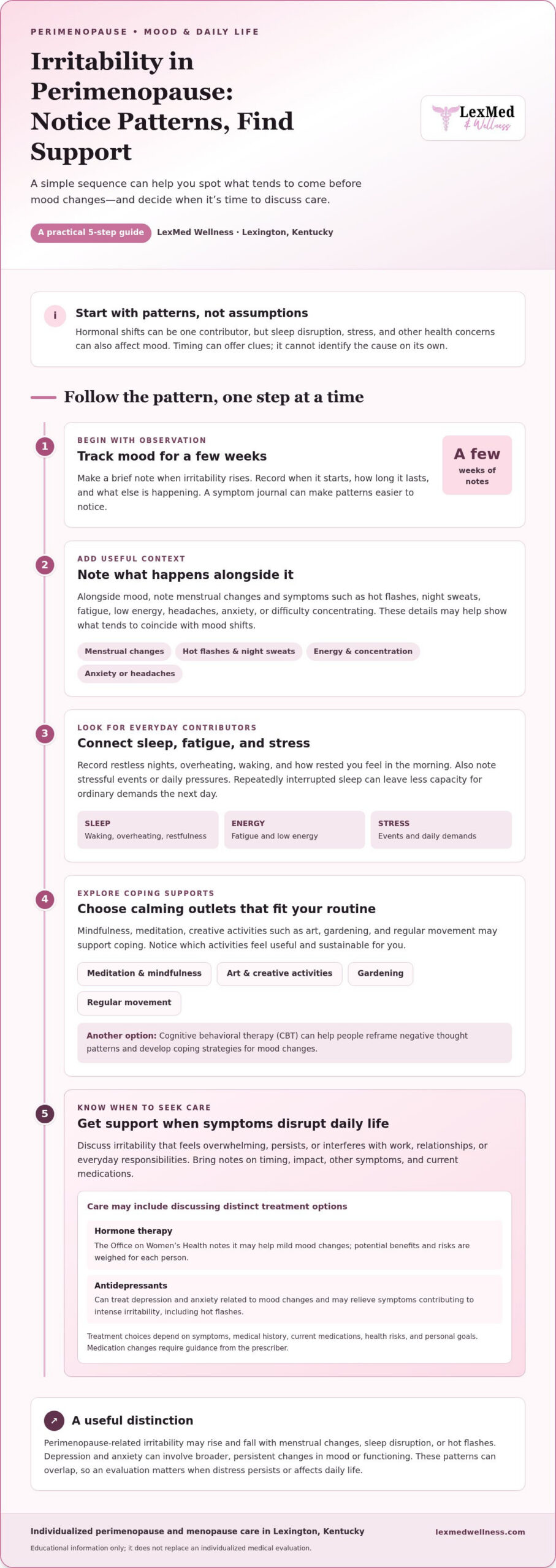
During the menopause transition, irritability may be related to hormonal fluctuations, disrupted sleep, stress, or other health concerns. Tracking your mood alongside menstrual changes and other symptoms for a few weeks can reveal useful patterns.
Hormonal Fluctuations and Mood Regulation
Hormonal fluctuations are shifts in estrogen and progesterone that can influence brain chemicals involved in mood regulation. Changing estrogen levels may affect serotonin and dopamine, which help shape emotional responses. This connection can help explain why dealing with irritability during perimenopause feels different from ordinary frustration, though hormones aren’t the only possible cause. Menopause is defined as going 12 months without a menstrual period, according to the Office on Women’s Health. It typically occurs between ages 45 and 55, according to the Office on Women’s Health.
Symptoms Accompanying Mood Changes
Perimenopause symptoms accompanying mood changes are physical or cognitive concerns that can add to emotional strain. Hot flashes, night sweats, fatigue, low energy, headaches, anxiety, and difficulty concentrating may occur alongside irritability. For example, repeated night sweats can leave someone tired the next day, making work or family pressures harder to manage. A symptom journal kept for a few weeks can help connect mood shifts with sleep, menstrual changes, and daily stressors.
Distinguishing Irritability from Other Causes
Perimenopause-related irritability may rise and fall with menstrual changes, sleep disruption, or hot flashes. These patterns can overlap with other things, so timing alone can’t identify the cause. Note when symptoms begin, how long they last, and what else changes. Seek an evaluation if distress persists or affects daily life.
Typical Duration of Irritability
Perimenopause-related irritability can recur during the transition, whose length varies from person to person. Perimenopause generally lasts around four years, though it can range from two to ten years. Irritability doesn’t necessarily continue throughout that period; it may fluctuate with symptoms, sleep, and life stress. Regular movement, mindfulness, and identifying emotional triggers can support coping. Lexington-area readers exploring care can learn about menopause treatment in Lexington.
Medical care and hormone therapy for perimenopause.
Irritability often goes along with hot flashes, night sweats, poor sleep, and changing estrogen and progesterone levels. A hormone-focused evaluation at LexMed Wellness looks at your symptoms, health history, appropriate labs, and risks before we talk about hormone therapy or non-hormonal options. The Menopause Society offers hormone therapy information too.
Hormonal and Brain-Related Contributors
An assessment considers whether irritability occurs alongside other perimenopause symptoms or follows a different pattern. This matters because mood changes can have several contributors, and treatment decisions should address the concerns affecting daily life. Share when symptoms began, how they affect your routine, what medications you take, and any relevant health history. These details help guide a focused evaluation without assuming a single cause.
Hormone Therapy Options
Hormone therapy for perimenopause Lexington KY is one option we may discuss, along with non-hormonal choices. The Office on Women’s Health notes that hormone therapy may help mild mood changes; benefits and risks are weighed for each person. A treatment talk can cover what to expect and how progress will be checked.
When to Seek Medical Care
Arrange a visit if irritability feels overwhelming or disrupts work, relationships, or daily tasks. Bring notes about symptom timing, effects on your day, and current medications. If mood symptoms are severe, persistent, or include thoughts of self-harm, contact your primary care provider or call/text 988.
Sleep disruption, fatigue, and irritability
Disrupted sleep can leave you with less capacity to manage ordinary demands the next day. After repeated waking, a minor delay or household request may feel harder to handle. Notice whether fatigue is strongest after nights with overheating, difficulty falling asleep, or waking for another reason. These details can help distinguish a sleep-related pattern from frustration that builds during a busy day. They also clarify what may be affecting your energy and concentration.
Hot flashes and night sweats can interrupt rest, but the pattern matters. Record when you wake, whether you feel overheated, and how rested you feel in the morning. For example, waking soon after falling asleep differs from waking repeatedly near morning. A brief sleep log can also note late caffeine, alcohol, screen use, and stressful events. Reviewing these details may reveal a habit or symptom that coincides with restless nights, without assuming every awakening has the same cause.
A consistent bedtime and wake time can make sleep routines easier to maintain. Keep the bedroom dark and cool; the suggested room temperature is around 67 degrees. Avoid screens during the hour before bed, and keep a regular schedule rather than sleeping in after a difficult night. If night sweats are a problem, breathable layers can make it easier to adjust without fully waking. Small, repeatable changes are often easier to assess than changing several habits at once.
Caffeine and alcohol can affect sleep for some people, so note whether their timing coincides with restless nights. A few short exercise sessions each week can support sleep, and a calming wind-down activity may help. Midlife weight changes can affect energy and mood, and medical weight loss support is one option to explore. If fatigue continues, bring your sleep notes to an appointment.
How perimenopause-related irritability may feel
Irritability may feel less like a single outburst and more like a change in your emotional bandwidth. A conversation that once felt manageable may suddenly seem exhausting, or a small disagreement may leave you tense long afterward. Some people first notice impatience; others feel easily criticized, emotionally exposed, or unusually defensive. The experience can be unsettling, especially when it differs from how you usually respond to people you care about.
Afterward, you may feel regret, embarrassment, or confusion about why your reaction felt so intense. That second wave of emotion can make it harder to explain what happened without blaming yourself. Try describing the experience specifically: “I felt overwhelmed during that conversation,” rather than “I’m always angry.” Clear language helps separate a temporary emotional response from a judgment about your personality.
Notice the setting as well as the feeling. Does irritation arise during a demanding transition, after several decisions, or when you feel rushed or unheard? These observations don’t prove hormonal changes caused a particular reaction. They can, however, help you explain what has changed and what support might help. A trusted person may help identify situations that feel especially difficult without dismissing your experience.
If emotional changes begin affecting relationships or responsibilities, that impact matters even if symptoms come and go. You can describe what others might notice, such as withdrawing from conversations or struggling to recover after conflict. That gives a healthcare discussion more context than the word “irritable” alone. Some women describe this as perimenopause rage, and it is worth sharing.
LexMed Wellness: Hormone Replacement Therapy
LexMed Wellness offers Hormone Replacement Therapy for people seeking care for perimenopause symptoms, including mood changes that occur alongside hot flashes or night sweats. Hormone therapy isn’t right for everyone, so treatment decisions take into account health history, symptoms, medications, risk factors, and personal goals.
In Lexington, Kentucky, an individualized evaluation can help clarify whether hormonal changes may contribute to your symptoms and which options may suit your needs.
Make space for a clearer plan
Perimenopause irritability can start to ease when you notice what has changed and decide what support would help. Bring the concerns that matter most to you, such as mood changes affecting relationships or sleep trouble. A focused evaluation can review your symptoms, health history, labs, and risks before discussing care.
Ready to feel more like yourself? Schedule a perimenopause visit with LexMed Wellness at 80 Codell Dr, Suite 150, Lexington, KY, or call (859) 412-2250.
Frequently Asked Questions
Are outlets like meditation, mindfulness, art or gardening useful?
These activities can offer a focused way to pause and channel your attention during a tense moment. Try a brief guided meditation, sketch while listening to music, or tend a few plants after a demanding day. Choose an outlet that feels approachable enough to use regularly. If an activity feels frustrating rather than calming, try another option instead of treating it as a test you must pass.
Does perimenopause make you angry?
Perimenopause can coincide with irritability or anger, but not everyone experiences these feelings. A reaction may feel unusually intense, come on quickly, or be harder to let go of. Consider what else is happening, such as poor sleep, hot flashes, or stress at work. If anger is frequent or disrupts relationships, a medical evaluation can help explore hormonal and non-hormonal contributors.
Is there anything that partners can do to help?
Yes. Partners can listen without dismissing the concern, ask what support would help, and agree to pause calmly during tense conversations. For example, after a rough night, a partner might take over a time-sensitive household task rather than debate whether a reaction was justified. Sharing information about perimenopause can also help couples discuss changes without assigning blame or expecting one person to manage everything alone.
What are some ways to manage your anger?
Try pausing before you respond: step away briefly, drink water, or write a message draft without sending it. Later, identify the trigger and consider what practical change might help next time. If anger is frequent or overwhelming, a hormone evaluation can be a good next step.
What emotional changes can happen during perimenopause?
Emotional and thinking changes can include irritability, mood swings, low mood, difficulty concentrating, or forgetfulness. These can overlap with stress or sleep problems. A hormone evaluation can look at your symptoms, history, and labs to help find what is contributing.
What is perimenopause rage?
“Perimenopause rage” is an informal phrase for episodes of intense anger or irritability during the menopause transition, not a formal diagnosis. These feelings may occur alongside mood swings, disrupted sleep, or other symptoms, but they can have multiple contributors. Notice how often episodes happen, what comes before them, and how they affect daily life. Those details can help guide a conversation about support and treatment options.