

Searching for BHRT near me is often the first step for individuals in Lexington and Central Kentucky experiencing persistent symptoms such as chronic fatigue, unexplained weight changes, night sweats, sleep disruptions, or mood shifts. Bioidentical hormone replacement therapy (BHRT) has gained attention as a personalized approach to managing hormonal shifts associated with perimenopause, menopause, and age-related testosterone decline. However, finding the right provider involves more than choosing the closest clinic on a map. Safe, effective hormone therapy requires a thorough clinical assessment, targeted diagnostic testing, an understanding of pharmacology, and careful ongoing monitoring.
At LexMed Wellness in Lexington, KY, hormone evaluations are approached through evidence-based clinical protocols. This guide explains how bioidentical hormones differ from conventional treatments, what credentials and safety practices to look for in a local clinician, and how an individualized care plan is developed and monitored over time.
Understanding Bioidentical Hormone Therapy: Definitions and Formulations
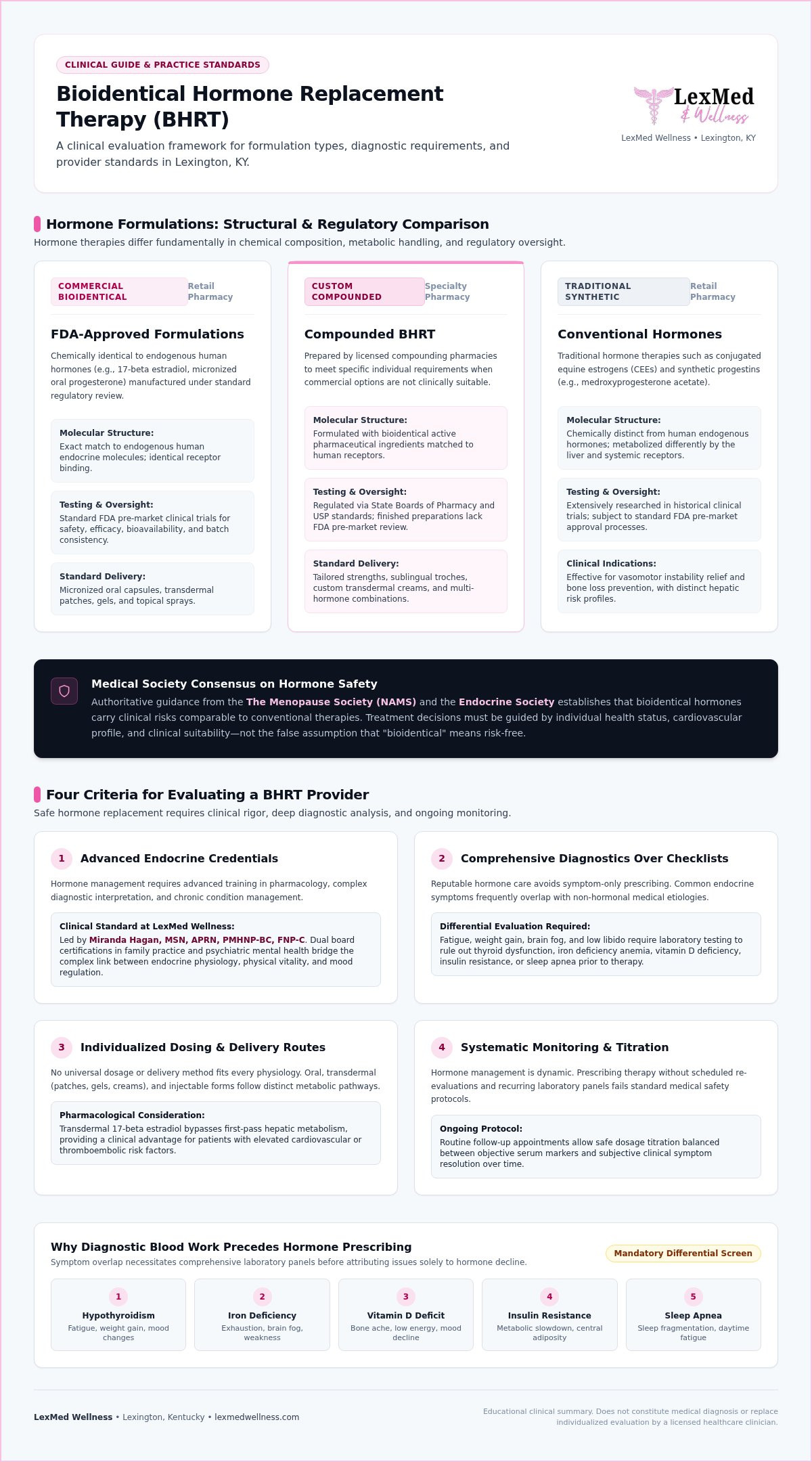
bioidentical hormone replacement therapy refers to the use of supplemental hormones that are chemically and molecularly identical to the endogenous hormones naturally produced by the human endocrine system, such as 17-beta estradiol, progesterone, and testosterone. Because their chemical structures match endogenous human hormones, they bind to the body’s hormone receptors in the same physiological manner.
A common misconception is that all bioidentical hormones are prepared in compounding pharmacies or that they exist entirely outside conventional medical practice. In reality, hormone therapies fall into distinct regulatory categories:
- FDA-Approved Bioidentical Formulations: Many commercially manufactured hormone therapies available at retail pharmacies are bioidentical. These include micronized oral progesterone and various transdermal 17-beta estradiol patches, gels, and sprays. These products undergo standard FDA clinical trials to evaluate safety, efficacy, batch-to-batch consistency, and bioavailability.
- Compounded Bioidentical Formulations: Compounded BHRT is prepared by licensed compounding pharmacies to meet individualized patient specifications. These preparations are typically prescribed when a patient requires a specific dosage strength, combination of hormones, or delivery format (such as certain sublingual troches, topical creams, or specific formulations) that is not commercially available. While compounded medications are mixed under state board of pharmacy regulations and United States Pharmacopeia (USP) standards, the compounded finished products do not go through individual FDA pre-market approval.
- Conventional Synthetic Hormones: Traditional hormone therapy often utilizes synthetic progestins (such as medroxyprogesterone acetate) or conjugated equine estrogens (CEEs). While these medications effectively relieve symptoms such as vasomotor instability and prevent bone loss, their chemical structures differ slightly from human endogenous hormones, leading to differences in how they are metabolized by the liver and interact with various receptors throughout the body.
Clinical guidelines from organizations such as the North American Menopause Society (The Menopause Society) and the Endocrine Society emphasize that bioidentical hormones carry clinical risks similar to conventional hormone therapies. Choosing bioidentical hormones should be based on clinical suitability, personal health history, and tolerance rather than an assumption that “bioidentical” means risk-free.
Criteria for Selecting a BHRT Provider Near You
When searching for a local hormone provider in Central Kentucky, evaluating the clinical rigor of the practice is critical. Hormone therapy influences multiple physiological pathways, including cardiovascular function, metabolic health, bone density, and emotional well-being. Selecting a qualified healthcare partner ensures that treatment decisions are guided by clinical evidence rather than commercial trends.
1. Advanced Clinical Credentials and Endocrine Training
Hormone management requires advanced training in pharmacology, diagnostic interpretation, and chronic condition management. Look for a licensed medical provider—such as an Advanced Practice Registered Nurse (APRN), Nurse Practitioner (NP), or Physician (MD/DO)—who has focused clinical experience in endocrine health, women’s health, or men’s health. At LexMed Wellness, clinical care is led by Miranda Hagan, MSN, APRN, PMHNP-BC, FNP-C, whose dual board certifications in family practice and psychiatric mental health provide a comprehensive perspective on the complex relationship between endocrine function, physical symptoms, and mood regulation.
2. Comprehensive Diagnostic Testing Over Symptom-Only Prescribing
A reputable provider will not prescribe hormone replacement therapy based solely on a symptom checklist. Many symptoms commonly attributed to hormone imbalance—such as fatigue, weight gain, brain fog, and low libido—overlap significantly with other medical issues, including hypothyroidism, iron deficiency anemia, vitamin D deficiency, insulin resistance, or sleep apnea. A thorough evaluation must incorporate comprehensive blood work to assess baseline hormone levels alongside broader metabolic and organ function markers before initiating any therapy.
3. Individualized Dosing and Delivery Methods
There is no universal dosage or route of administration suitable for every patient. Oral, transdermal (patches, gels, creams), and injectable formulations each have distinct metabolic pathways, benefits, and risk profiles. For example, transdermal estradiol bypasses first-pass hepatic metabolism, which is often preferable for individuals with specific cardiovascular or thromboembolic risk considerations. A competent provider evaluates your personal health history, family history, and lifestyle to determine the most appropriate delivery method.
4. Consistent Follow-Up and Monitoring Protocols
Hormone management is a dynamic clinical process that requires ongoing adjustments. Providers who offer prescriptions without scheduling routine follow-ups, symptom re-evaluations, and periodic blood work do not meet standard safety protocols. A local clinic in Lexington, KY allows you to establish a continuing relationship where dosages can be titrated carefully based on both objective lab findings and clinical symptom response.
Key Questions to Ask a Prospective Hormone Provider
Before beginning treatment, preparing practical questions can help you determine whether a clinic aligns with high clinical standards. During your initial consultation, consider asking the following:
- What are your clinical credentials and experience with hormone therapy? Confirm that the provider is fully licensed to practice independently and has specific clinical experience managing hormone therapies for men or women.
- What diagnostic testing do you require before prescribing? Inquire whether the panel includes more than just total hormone levels. A thorough assessment typically evaluates free and total hormone levels, thyroid panels, metabolic markers, and lipid profiles.
- Do you utilize FDA-approved bioidentical hormones, compounded formulations, or both? Understanding which formulations a provider uses clarifies your options, insurance coverage potential, and the clinical rationale for each recommendation.
- What is your ongoing monitoring protocol? Ask how frequently you will need follow-up appointments and repeat blood work during the first year of therapy. Responsible providers generally recheck labs within 6 to 12 weeks of starting or changing a dose.
- How do you evaluate and mitigate cardiovascular and oncological risks? The provider should be prepared to discuss absolute and relative contraindications, such as personal history of hormone-sensitive cancers, unexplained uterine bleeding, or history of blood clots.
- What are the expected out-of-pocket costs? Clarify consultation fees, follow-up visit costs, lab testing expenses, and medication pricing upfront.
The Clinical Evaluation Process: What to Expect
Understanding the standard clinical workflow can help demystify hormone replacement therapy and set realistic expectations for care.
Step 1: The Initial Clinical Consultation
The evaluation begins with an extensive review of your medical history, current symptoms, previous treatments, and lifestyle factors. During this visit, your clinician will review symptom duration, severity, and functional impact. Discussions typically cover sleep quality, cognitive performance, energy patterns, menstrual history (for women), and sexual health.
For female patients experiencing irregular cycles, hot flashes, or sleep disturbances, evaluating whether symptoms indicate perimenopause or postmenopause is essential. Patients seeking specialized care often begin with an evaluation for perimenopause treatment or an assessment of hormone therapy for menopause to address vasomotor symptoms and long-term health markers.
Step 2: Baseline Diagnostic Laboratory Panels
Following the clinical history, objective diagnostic testing is ordered. Depending on your presentation, testing may include:
- Sex Hormone Markers: Estradiol, progesterone, total and free testosterone, sex hormone-binding globulin (SHBG), luteinizing hormone (LH), and follicle-stimulating hormone (FSH).
- Thyroid Panel: Thyroid-stimulating hormone (TSH), free T3, and free T4 to rule out primary thyroid dysregulation that frequently mimics hormone decline.
- Metabolic & Complete Health Panels: Comprehensive metabolic panel (CMP), complete blood count (CBC), lipid profile, hemoglobin A1c, and fasting insulin to assess liver, kidney, and glucose management.
For men experiencing symptoms such as reduced stamina, loss of lean muscle mass, or diminished libido, targeted testing determines whether hypogonadism is present. Clinical guidelines require objective morning blood draws before considering testosterone replacement therapy to establish genuine clinical deficiency.
Step 3: Protocol Formulation and Discussion of Risks
Once laboratory results return, a dedicated appointment is held to review the data in the context of your symptoms. If hormone therapy is clinically indicated, your provider will discuss potential modalities, anticipated outcomes, limitations, and risks. Informed consent is a foundational element of this stage; patients should have ample time to discuss any concerns regarding potential side effects or long-term safety before initiating treatment.
Step 4: Dosage Titration and Ongoing Surveillance
After treatment begins, your body requires time to adapt to supplemental hormones. Clinical follow-up visits and repeat lab panels are typically scheduled at 6- to 12-week intervals during the initial phase. These check-ins allow the clinician to assess symptom resolution, evaluate potential adverse reactions (such as fluid retention, breast tenderness, or changes in hematocrit levels), and adjust doses incrementally. Once a stable therapeutic response is reached, surveillance transitions to periodic maintenance visits, typically every 6 to 12 months.
Bioidentical vs. Conventional Hormone Therapy: Making an Informed Choice
Much of the public conversation surrounding bioidentical hormones portrays them as completely distinct from conventional medicine. However, clinical decision-making relies on comparing pharmacological properties, routes of administration, and safety data.
| Feature | FDA-Approved Bioidentical | Compounded Bioidentical | Conventional Synthetic |
|---|---|---|---|
| Molecular Structure | Identical to endogenous human hormones | Identical to endogenous human hormones | Chemically modified or animal-derived analogs |
| FDA Oversight | Undergoes rigorous FDA pre-market safety/efficacy review | Prepared in state-regulated pharmacies; finished product lacks individual FDA approval | Undergoes rigorous FDA pre-market safety/efficacy review |
| Dosing Flexibility | Standardized, fixed commercial doses | Customized formulations and fractional strengths | Standardized, fixed commercial doses |
| Common Delivery Routes | Transdermal patches/gels, oral capsules | Topical creams, sublingual troches, capsules | Oral tablets, synthetic injections |
| Safety Profile | Known risk profile based on clinical trial data | Risks similar to active hormones; limited large-scale safety trial data | Extensively studied (e.g., WHI study) with well-documented risks |
One of the primary clinical advantages of bioidentical transdermal estradiol over oral synthetic estrogens is its avoidance of hepatic first-pass metabolism. When taken orally, estrogens stimulate hepatic production of clotting factors and inflammatory markers, which can elevate the risk of venous thromboembolism (VTE). Transdermal application delivers estradiol directly into the systemic circulation, significantly reducing this specific clotting risk for many patients. However, the requirement for endometrial protection remains: any woman with an intact uterus receiving systemic estrogen therapy must also take adequate progesterone to prevent endometrial hyperplasia and reduce the risk of uterine cancer.
Why Local Expertise Matters for Hormone Care
While direct-to-consumer online platforms provide convenient digital access, remote-only hormone management often lacks crucial clinical elements. Managing hormone balance involves subtle nuances that are best addressed through a dedicated, local clinician-patient partnership.
Having a local provider in Lexington, KY offers distinct practical advantages:
- Direct Physical Coordination: Local care allows for in-person physical assessments, vital sign monitoring, and coordinated care with regional diagnostic imaging centers for required baseline health screenings, such as mammograms and pelvic ultrasounds.
- Familiarity with Regional Pharmacies: Local providers maintain regular working relationships with reputable commercial and compounding pharmacies throughout Central Kentucky, ensuring reliable access to high-quality formulations and proper dispensing guidance.
- Accessible Dose Adjustments: Hormonal needs change over time due to stress, aging, illness, and metabolic fluctuations. A local clinician is readily accessible to re-evaluate symptoms, order prompt lab draws, and make timely dosage modifications when necessary.
Individualized Hormone Care at LexMed Wellness in Lexington, KY
At LexMed Wellness, we provide comprehensive, personalized hormone replacement evaluations for adults throughout Lexington, Georgetown, Nicholasville, and surrounding Central Kentucky communities. Our practice is built on the principle that safe healthcare requires thorough clinical analysis rather than standard protocols or unsupported marketing claims.
Led by Miranda Hagan, MSN, APRN, PMHNP-BC, FNP-C, our clinic takes an unhurried, whole-person approach to diagnostic assessment. During your evaluation, we analyze the clinical connections between your endocrine profile, physical vitality, sleep architecture, and emotional well-being. Where clinically appropriate, care plans may also integrate guidance on lifestyle, nutritional considerations, or medically supervised metabolic support to address systemic wellness.
All evaluations and follow-up care are scheduled by appointment to provide dedicated time for thorough consultation, clear communication, and personalized oversight. LexMed Wellness operates as a specialized outpatient wellness practice and does not provide emergency medical services.
Frequently Asked Questions About BHRT
How long does it take to see results from BHRT?
Response times vary depending on the individual, the hormone prescribed, the delivery method, and the dosage. Some individuals notice subtle improvements in sleep or hot flash frequency within 3 to 6 weeks, while adjustments in energy, mood stability, or body composition often require 8 to 12 weeks of consistent therapy. Hormone therapy is a gradual process requiring careful titration rather than an immediate fix.
Does insurance cover bioidentical hormone replacement therapy?
Insurance coverage depends heavily on the specific formulation prescribed. Many FDA-approved bioidentical hormones—such as transdermal estradiol patches and oral micronized progesterone—are routinely covered by commercial insurance plans and Medicare, subject to standard co-pays and deductibles. Custom compounded bioidentical medications, however, are typically not covered by insurance and require out-of-pocket payment. Diagnostic lab tests are frequently eligible for insurance coverage depending on your specific network benefits.
Is BHRT safer than traditional hormone replacement therapy?
Bioidentical hormones are not inherently risk-free or universally safer than conventional therapies. Both bioidentical and synthetic hormones carry potential risks, including cardiovascular events, blood clots, gallbladder disease, and hormone-sensitive tissue proliferation. While transdermal bioidentical estradiol demonstrates a lower thrombotic risk compared to oral estrogens in clinical studies, all hormone therapy must be evaluated on an individualized risk-versus-benefit basis.
What are the most common symptoms treated with BHRT?
BHRT is most commonly utilized to manage moderate-to-severe vasomotor symptoms (hot flashes and night sweats), vaginal dryness, sleep disturbances, cognitive changes (“brain fog”), and mood lability associated with perimenopause and menopause. In men, testosterone therapy is indicated for clinically documented hypogonadism presenting with persistent fatigue, diminished libido, loss of muscle mass, and depressive symptoms.
Do I need a referral to see a BHRT provider in Lexington?
In most cases, patients do not need a formal referral from a primary care physician to schedule an initial consultation at LexMed Wellness. However, sharing previous medical records, recent routine laboratory testing, and reports from routine screenings (such as mammograms or prostate exams) helps ensure a safe, collaborative diagnostic assessment.
Schedule a Clinical Hormone Evaluation in Lexington
If you are experiencing symptoms associated with hormonal changes and want to explore evidence-based treatment options, professional medical guidance is essential. Finding a qualified provider for BHRT near you ensures your care begins with accurate testing and continues with careful medical monitoring.
To discuss your symptoms, review your health history, and determine whether bioidentical hormone therapy is clinically appropriate for you, contact LexMed Wellness in Lexington, KY to schedule an individualized consultation.
Medical Disclaimer: The information provided in this article is for educational purposes only and is not a substitute for professional medical advice, diagnosis, or treatment. Hormone therapies carry risks and contraindications that must be evaluated by a licensed healthcare provider based on individual medical history, laboratory evaluation, and clinical examination. LexMed Wellness does not guarantee specific clinical outcomes.