

Emotional symptoms of hormone imbalance in women can include irritability, mood swings, anxiety, low mood, and brain fog. These changes can show up during perimenopause or menopause, but having them doesn’t confirm that hormones are the cause. If you’re in Lexington, KY and wondering what’s behind them, menopause and perimenopause care in Lexington starts with listening to your experience and health history.
Stress, thyroid conditions, medications, and mental health conditions can also contribute to mood and focus changes, so context matters. At LexMed Wellness, Miranda Hagan, APRN, PMHNP-BC, FNP-C, provides individualized care. Noting when a change began, whether it comes and goes, and how it relates to your cycle and sleep helps.
Common Emotional Symptoms of Hormone Imbalance in Women
Some women notice irritability, mood shifts, anxiety, low mood, or difficulty concentrating during hormonal transitions. Others experience different changes, or none at all. These symptoms aren’t a fixed checklist, and the same feeling can have more than one explanation.
- Irritability and mood swings
- Anxiety
- Low mood
- Brain fog and difficulty concentrating
Irritability and Mood Swings
Changes may start subtly: less patience during a busy day, feeling more emotionally reactive than usual, or having trouble focusing on a familiar task. Everyday stress may also feel harder to manage. These experiences can affect work, relationships, or routines, and they don’t look the same for everyone.
A short stretch of irritability differs from mood swings that keep returning. Notice when they began and how they affect your days.
Anxiety and Low Mood
Anxiety may feel like restlessness or constant worry. Low mood may feel like flatness or sadness that lingers. Both can affect work, sleep, and relationships.
Brain Fog and Difficulty Concentrating
Brain fog can feel like losing your train of thought, forgetting words, or struggling with familiar tasks.
How Perimenopause and Menopause May Affect Mood
Some women notice emotional changes during perimenopause, the transition leading up to menopause, while others don’t. Menstrual changes and sleep disruption, such as night waking, can sit alongside mood changes. Their presence alone doesn’t show that hormones are responsible. Our perimenopause treatment page explains more.
Other Factors That Can Affect Your Symptoms
Stress, thyroid conditions, medications, and mental health conditions may also contribute to changes in mood, anxiety, or focus, and can occur alongside perimenopause or menopause.
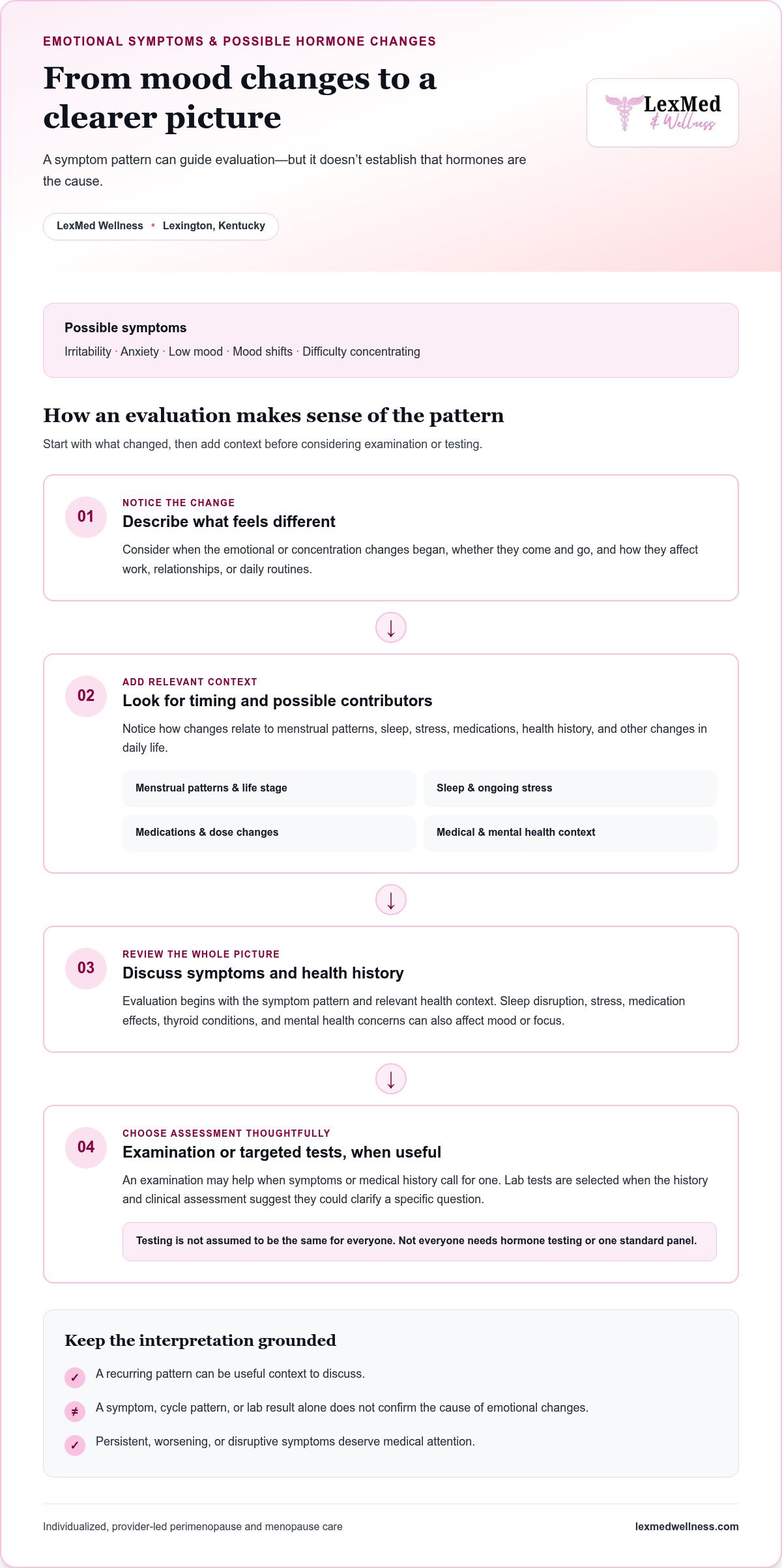
What to Expect During an Evaluation
An evaluation looks at your symptoms, menstrual history, sleep, medications, and health history, with testing when clinically appropriate.
Care is individualized. Options may include lifestyle support, sleep strategies, and mental health support, and for some women, hormone replacement therapy. Whether it’s suitable depends on individual assessment, and results vary.
If weight changes are showing up alongside menopause symptoms, we can discuss medical weight loss in Lexington, KY as part of your overall plan.
Personalized Menopause Care in Lexington, KY
Consider an appointment if emotional changes persist, worsen, or interfere with work, relationships, sleep, or daily life. You don’t need to know the cause first.
At LexMed Wellness in Lexington, KY, Miranda Hagan, APRN, PMHNP-BC, FNP-C, tailors menopause care to your symptoms, medical history, and goals.
Severe emotional distress or thoughts of self-harm need immediate support, not a routine appointment. In the United States, call or text 988 for the Suicide & Crisis Lifeline. If there’s immediate danger, contact emergency services.
Next Steps
You don’t need a definite explanation to seek guidance. Emotional symptoms of hormone imbalance in women deserve attention, whatever their cause.
Noticing changes in your mood, sleep, or focus? Explore personalized menopause and perimenopause care at LexMed Wellness in Lexington, KY.
Frequently Asked Questions
Can hormone imbalance cause anxiety or mood swings in women?
Hormonal changes can coincide with anxiety or mood swings, but these feelings aren’t specific to hormones. An evaluation considers the pattern and its effect on daily life.
Which hormones can affect mood in women?
Reproductive hormones, including estrogen and progesterone, may be relevant during menstrual, perimenopausal, or menopausal transitions. Thyroid hormones and other health factors can also affect how someone feels. Mood changes alone don’t identify a particular hormone as the cause.
Can emotional symptoms start during perimenopause before periods stop?
Yes. Emotional changes can begin during perimenopause, while periods are still occurring. The timing can be useful to share during an evaluation, but it doesn’t establish the cause on its own.
Do emotional symptoms mean I need hormone therapy?
No. Treatment decisions take into account symptoms, health history, medications, risk factors, and goals.
When should I seek help for mood changes I think may be hormone-related?
Seek an evaluation if mood changes persist, worsen, or make everyday responsibilities difficult. Severe distress or thoughts of self-harm call for immediate crisis help. In the United States, call or text 988; if there’s immediate danger, contact emergency services.