

What if feeling different after 40 is a reason to look closer, not proof that getting older is the only explanation? If you’re searching for how to feel like myself again after 40, changes in your energy, sleep, mood, weight, or motivation can be frustrating, especially when there’s no obvious cause.
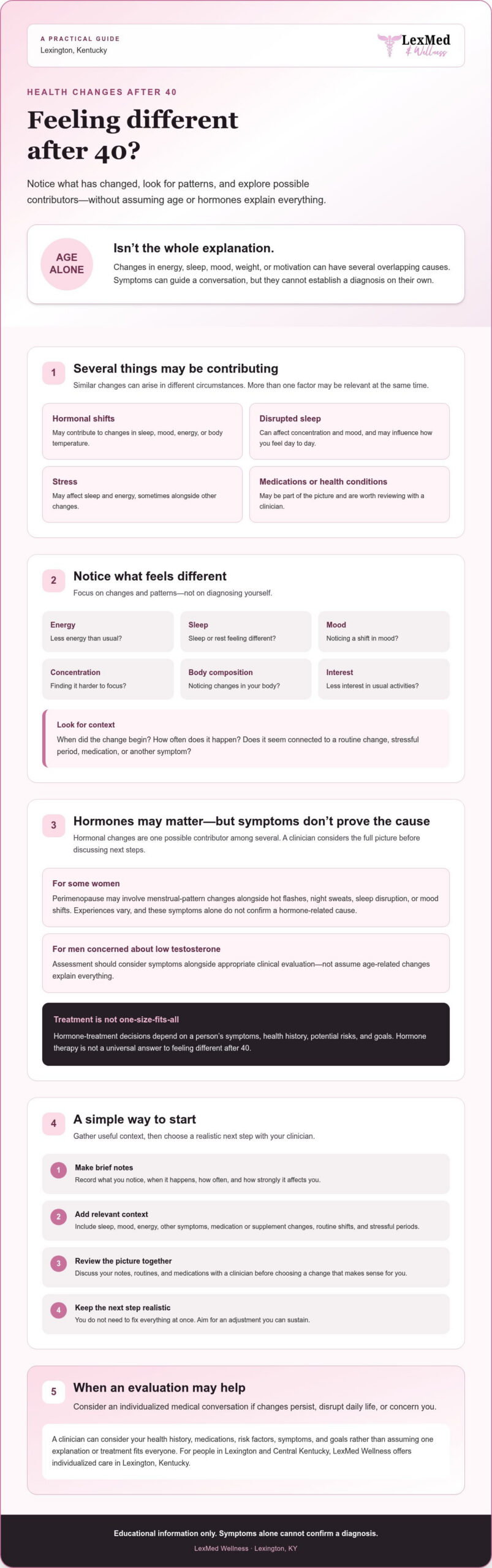
These changes can have several contributors, including hormonal shifts, stress, disrupted sleep, medications, or other health conditions. Age alone doesn’t tell you what’s behind them, and symptoms by themselves can’t confirm a diagnosis. You don’t need to solve everything at once or follow conflicting online advice.
This guide covers ways to notice patterns, choose practical first steps, and decide when an individualized medical conversation may be useful. A clinician can consider your health history, medications, risk factors, and goals rather than assume one treatment fits everyone. For people in Lexington and nearby communities, LexMed & Wellness is based in Lexington, Kentucky, and offers personalized hormone replacement therapy.
Key Takeaways
- Changes in energy, sleep, mood, weight, or motivation after 40 can have several overlapping causes, so age alone may not explain how you feel.
- Learning how to feel like myself again after 40 starts with noticing patterns, not diagnosing yourself from symptoms.
- Small, realistic adjustments may be a useful first step. Reviewing routines and medications with a clinician can help you choose what makes sense for you.
- If changes persist, disrupt daily life, or concern you, an individualized conversation in Lexington, KY, can help determine whether further assessment is appropriate.
Why might you feel unlike yourself after 40?
Changes after 40 can have several overlapping contributors, including disrupted sleep, ongoing stress, health conditions, medications, and hormonal changes. Feeling less energetic or emotionally steady can be unsettling, but it isn’t inevitable, and it doesn’t point to one specific diagnosis. A useful first step is to notice what has changed and look for patterns instead of assuming age explains everything.
A symptom pattern can guide a conversation, but it cannot establish a diagnosis on its own. This matters because the same concern, such as fatigue, may have different explanations and call for different next steps.
Which changes are worth paying attention to?
Notice shifts in energy, sleep, mood, concentration, body composition, or interest in activities you usually enjoy. Consider when each change began, how often it occurs, and whether it seems connected to a routine change, stressful period, medication, or another symptom. Brief notes can help you describe the pattern clearly without turning self-monitoring into self-diagnosis.
Why age alone does not explain every symptom
Similar symptoms can occur in different health and life circumstances. For some women, perimenopause, the transition leading up to menopause, may be relevant. Fluctuating hormones can accompany changes such as hot flashes, sleep disruption, or mood shifts, but those experiences don’t confirm a hormone-related cause by themselves. A clinician can consider the full picture, including health history and medications, before discussing possible contributors. To learn more about that transition, see LexMed & Wellness’s information on perimenopause evaluation and care.
If you’re wondering how to feel like myself again after 40, start by describing what feels different rather than deciding in advance that hormones are responsible. That gives a medical conversation a clearer place to begin.
What can change after 40, and how do hormones fit in?
Hormonal changes may contribute to changes in sleep, mood, energy, or body temperature after 40, but they’re only one part of the picture. Stress, health conditions, medications, and disrupted sleep can cause similar experiences or intensify them. A symptom can raise a question worth exploring, but it can’t confirm a hormone problem by itself.
When might perimenopause or menopause be part of the picture?
For some women, perimenopause brings changes in menstrual patterns alongside symptoms such as hot flashes, night sweats, sleep disruption, or mood shifts. Others have few noticeable symptoms, and experiences can change over time. If these changes are affecting daily life, learn more about perimenopause evaluation and care or explore menopause treatment options.
Why symptoms alone cannot identify a hormone problem
Sleep loss can affect concentration and mood; stress may influence sleep and energy; and a medication or underlying health condition may also be relevant. Clinicians consider how symptoms developed, medical and medication history, and other health factors rather than treating one complaint as proof of a hormonal cause. For men concerned about low testosterone, assessment should consider symptoms alongside appropriate clinical evaluation, not assume age-related changes explain everything. Learn about testosterone therapy evaluation.
Hormone treatment decisions depend on a person’s symptoms, health history, potential risks, and goals. Hormone therapy isn’t a universal answer to feeling different after 40. Sleep, movement, and nutrition also matter to overall health; UNC Health offers practical ideas for better health in your 40s and 50s. For people in Lexington, Kentucky, a clinician can help consider these factors together before discussing whether hormone-related care may be appropriate.
How can you start feeling more like yourself again?
Start by looking for patterns, then review your routines and medications with a clinician before choosing one realistic next step. A symptom log can support a conversation, but it cannot establish a diagnosis. The goal isn’t to monitor every detail or fix everything at once. It’s to gather useful context and make changes you can sustain.
What should you track before making changes?
Use a notebook or phone note to record what you notice, when it happens, how often, and how strongly it affects you. Include sleep, mood, energy, and other symptoms. Add relevant context, such as a medication or supplement change, a shift in your routine, or a particularly stressful period. Bring the notes to a clinician; they can help guide questions without serving as a self-diagnosis.
Which first steps are realistic and sustainable?
After reviewing the pattern and your health history with a clinician, choose one manageable adjustment. You might aim for a steadier bedtime, add a regular walk, plan balanced meals, or make time for a stress-management practice. These habits support general health, but they aren’t cures for every cause of feeling different.
Give a change room to fit into real life before adding another. Avoid restrictive diets and unverified supplements, and don’t stop prescribed medicines without medical guidance. If you are considering nutritional support for midlife changes, educational insights from Evabiotic offer a clinical perspective on perimenopause and metabolic resilience. If you’re asking how to feel like myself again after 40, steady, informed steps are more useful than chasing a quick fix.
If hormone-related changes are part of your concern, LexMed & Wellness in Lexington, KY, offers personalized hormone replacement therapy. Its approach can take symptoms, health history, medications, risks, and goals into account. Learn more about menopause treatment and hormone-related evaluation.
When should you seek an evaluation in Lexington, KY?
Consider speaking with a clinician if changes persist, interfere with daily activities, or simply concern you. You don’t need to know the cause before asking for help. A conversation can put symptoms in context and help determine whether further assessment or a change in your care is appropriate.
What happens during an individualized conversation?
A clinician may ask when symptoms began, how they affect daily life, and what has changed in your health or routines. Bring your symptom notes, relevant medical history, and a current list of medications and supplements. An examination or tests may be appropriate depending on your symptoms and history; results are interpreted alongside that broader picture, not in isolation. No single test or treatment plan is right for everyone.
How can hormone therapy fit into the discussion?
Hormone therapy may be one option when symptoms and individual circumstances make it clinically appropriate. A discussion should consider potential benefits, risks, and monitoring needs, as well as your health history and goals. It isn’t an automatic response to feeling different after 40. For more background, explore this overview of hormone therapy for menopause.
If you’re in Lexington or nearby communities and have hormone-related concerns, LexMed & Wellness is based in Lexington, KY, and offers hormone replacement therapy. Its menopause treatment information can be a starting point for learning about care. This article is for educational purposes and doesn’t replace medical advice tailored to you.
Take a thoughtful next step toward feeling like yourself
Changes after 40 can have more than one contributor, and symptoms alone can’t tell you exactly what’s going on. Noticing patterns, making sustainable adjustments, and discussing persistent or disruptive changes with a clinician can help you decide what to explore next. That’s a practical starting point for how to feel like myself again after 40, without assuming that age or hormones explain everything.
For people in Lexington, Georgetown, Nicholasville, Louisville, Winchester, and Danville considering hormone-related concerns, LexMed & Wellness is based in Lexington, Kentucky, and offers personalized hormone replacement therapy. Treatment discussions should reflect individual symptoms, health history, risks, and goals.
If you’d like to explore whether personalized care may be appropriate for you, contact LexMed & Wellness to discuss an appointment. Services are available by appointment Monday through Friday. A clear, considered next step can begin with a conversation.
Frequently Asked Questions
Is it normal to feel different after 40?
Some people notice changes in sleep, energy, mood, or other aspects of health after 40, but there isn’t one universal cause. Hormonal transitions, life stress, health conditions, and medication effects may all be relevant. If a change persists, worsens, or interferes with daily life, discuss it with a qualified clinician rather than assuming it’s simply aging.
Can hormones make you feel unlike yourself after 40?
Hormonal changes may contribute to symptoms for some people, including during perimenopause or menopause, but similar concerns can have other explanations. Symptoms alone can’t confirm a hormone problem or determine whether treatment is appropriate. A clinician can review your history, symptoms, medications, relevant risks, and goals before discussing whether testing or hormone-related care makes sense.
How can I start feeling better after 40?
Start by noting what has changed, when it began, and how it affects daily life. Review sleep, stress, activity, nutrition, medications, and major life changes without assuming one factor explains everything. Choose sustainable adjustments instead of quick fixes. If you’re wondering how to feel like myself again after 40, a symptom record can help make a conversation with a clinician more specific.
Does everyone need hormone therapy after 40?
No. Reaching a certain age or experiencing a symptom doesn’t automatically mean hormone therapy is needed. Its appropriateness depends on individual symptoms, medical history, potential risks, goals, and clinical assessment. A clinician can discuss possible benefits, limitations, and monitoring, while also considering other possible causes and non-hormonal approaches where relevant. Treatment decisions should be personalized, not based on age alone.
When should I talk with a clinician about changes after 40?
Consider making an appointment if symptoms persist, disrupt your routine, change noticeably, or concern you. Bring notes about what you’ve noticed and when it occurs, along with relevant medical history and a current medication and supplement list. People in Lexington, Georgetown, Nicholasville, Louisville, Winchester, and Danville can seek guidance from a qualified clinician. LexMed & Wellness is based in Lexington, Kentucky. This article is educational and doesn’t replace individualized medical care.