

For many women in Central Kentucky, the journey with weight management is frustrating. You follow the conventional advice—eating less, exercising more—yet the numbers on the scale refuse to budge, especially as you navigate your 30s, 40s, and beyond. This experience often leaves you feeling unheard or wondering if you’re missing a key piece of the puzzle. The truth is, you’re not just fighting against calories; you’re often dealing with complex biological shifts that require a more sophisticated approach.
A medically supervised weight loss plan offers a path forward that acknowledges these complexities. Unlike one-size-fits-all diets, it uses clinical insights and advanced therapeutic tools to create a strategy tailored to your unique physiology. At LexMed & Wellness, we provide a medical weight loss for women in Lexington, KY, that moves beyond simple diet plans to address the underlying factors influencing your weight and overall health.
Biological Factors: Why Weight Management Changes for Women
If you’ve noticed that the weight loss methods that worked in your 20s are no longer effective, you’re not alone. A woman’s body undergoes significant hormonal and metabolic changes throughout her life. These shifts can create hurdles that willpower alone cannot overcome. In my practice, I often see women who are doing everything “right” but are still struggling due to underlying biological factors.
Metabolic resistance is a clinical reality where the body’s processes for regulating weight become less efficient, often due to a combination of hormonal changes, insulin resistance, and stress.
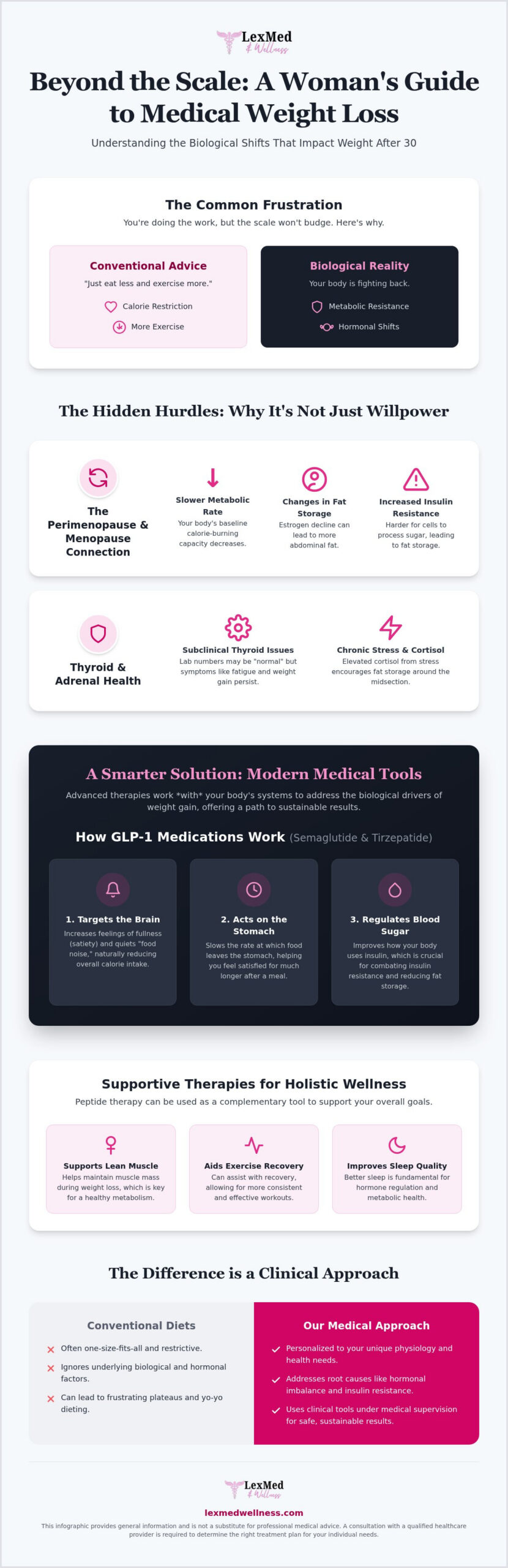
The Perimenopause and Menopause Connection
During perimenopause and menopause, declining levels of estrogen and progesterone can have a profound impact on body composition and metabolism. This hormonal shift is associated with:
- A Slower Metabolic Rate: As hormone levels drop, the body’s baseline calorie-burning capacity can decrease, meaning you may gain weight even without changing your diet or activity level.
- Changes in Fat Storage: Lower estrogen levels can cause the body to store more fat in the abdominal area, a type of fat linked to increased health risks.
- Increased Insulin Resistance: Hormonal fluctuations can make it harder for your cells to respond to insulin, leading to higher blood sugar and more fat storage.
While menopause hormone therapy (MHT) is primarily prescribed to manage symptoms like hot flashes and sleep disturbances, restoring hormonal balance can sometimes indirectly support a healthier body composition. For many women, addressing these underlying hormonal needs is a critical component of their overall wellness plan, though it is not considered a primary weight-loss treatment on its own.
Thyroid and Adrenal Health
Your thyroid and adrenal glands are central to metabolic regulation. Even subtle imbalances can disrupt your body’s ability to manage weight effectively. Standard lab tests may not always catch “subclinical” thyroid dysfunction, where TSH levels are technically “normal” but you still experience symptoms like fatigue, brain fog, and weight gain. Furthermore, chronic stress elevates cortisol, a hormone that can encourage the body to store fat, particularly around the midsection.
A comprehensive medical evaluation looks at the full picture, considering not just lab numbers but also your symptoms and lifestyle to identify these less obvious contributors to weight management challenges.
Medical Weight Management Tools: GLP-1s, Peptides, and More
Modern medicine offers powerful tools that work with your body’s own systems to support sustainable weight loss. These are not quick fixes, but rather therapies that, under medical supervision, can help address the biological drivers of weight gain. The key is understanding how they work and which approach is right for you. It’s important to recognize the difference between medical weight loss and traditional diet programs, as one focuses on clinical intervention while the other relies solely on behavioral changes.
Understanding GLP-1 Medications (Semaglutide & Tirzepatide)
GLP-1 (glucagon-like peptide-1) receptor agonists like semaglutide and tirzepatide have become important options for women’s weight loss in Lexington, KY. These injectable medications work by mimicking a natural hormone that your body produces when you eat. Their effects include:
- Increased Satiety: They send signals to your brain that you are full, which helps reduce overall calorie intake and quiet the “food noise” that can lead to overeating.
- Slower Gastric Emptying: The medication slows down the rate at which food leaves your stomach, helping you feel fuller for longer after a meal.
- Improved Blood Sugar Control: They help regulate insulin and blood glucose levels, which is particularly beneficial for individuals with insulin resistance.
A medically supervised GLP-1 protocol involves careful, individualized dosing to maximize effectiveness and minimize potential side effects like nausea. Regular check-ins are essential to monitor your progress and ensure the treatment remains appropriate for your health needs.
The Role of Peptide Therapy in Wellness
Peptide therapy uses specific chains of amino acids to signal various functions within the body. While not a primary weight loss treatment on their own, certain peptides can be used as a complementary therapy to support your overall goals. For example, some peptides are thought to help support lean muscle mass during weight loss, while others may assist with recovery from exercise or improve sleep quality—all of which are crucial components of a healthy metabolism.
For those interested in a deeper dive, learning about how peptide therapy works can provide more insight into its supportive role in a comprehensive wellness plan.
Ready to move beyond frustrating diet cycles? LexMed & Wellness offers a clinical, evidence-based approach to weight management for women in the Lexington area. Schedule Your Personalized Consultation Today.
Choosing a Weight Loss Clinic for Women in Lexington
Finding the right partner for your health journey is crucial. When evaluating a weight loss clinic for women in Lexington, it’s important to look beyond promises of rapid results and focus on the quality of care, the expertise of the provider, and the comprehensiveness of the program.
- Personalization: Does the program start with a thorough evaluation of your medical history and lab work? A truly personalized plan is based on your specific biology, not a generic diet template.
- Provider Expertise: Look for a provider, such as an Advanced Practice Registered Nurse (APRN), who has a deep understanding of female endocrinology and the interplay between hormones, metabolism, and weight.
- Comprehensive Support: Effective weight management involves more than just a prescription. The right clinic provides ongoing monitoring, lifestyle guidance, and adjustments to your plan as your body responds.
- Local Accessibility: For women in Central Kentucky, finding a clinic that conveniently serves Lexington, Georgetown, and Nicholasville makes it easier to stay consistent with follow-up appointments and ongoing care.
Key Questions to Ask Your Weight Loss Provider
To ensure you’re choosing the right clinic, consider asking these questions during your initial consultation:
- How do you assess and address potential hormonal factors that could be influencing my weight?
- What specific metabolic and hormonal lab tests are part of your initial workup?
- How do you monitor patients and manage potential side effects of medications like GLP-1s?
- What is your approach to long-term maintenance after I reach my weight goals?
The LexMed & Wellness Approach in Lexington, KY
At LexMed & Wellness, we believe that successful, long-term weight management for women requires a partnership built on trust, clinical expertise, and a deep understanding of your individual health story. Our process is designed to be thorough, supportive, and focused on sustainable well-being, not just a number on the scale.
Your journey with us begins with a comprehensive evaluation. This includes:
- A Detailed Health History: We discuss your past experiences with weight loss, current symptoms (like fatigue, poor sleep, or brain fog), and lifestyle.
- A Review of Medications: We assess any current medications that may be impacting your metabolism.
- Targeted Lab Work: We order appropriate labs to get a clear picture of your hormonal health, thyroid function, and key metabolic markers like insulin and glucose.
Based on this information, we develop a personalized treatment plan. This may include lifestyle and nutrition guidance, and when clinically appropriate, the use of medical therapies like GLP-1s or supportive peptide therapy. Throughout the process, we provide close follow-up care to monitor your progress, manage any side effects, and make adjustments to ensure your plan remains effective and safe.
Your Partner in Health
Our practice is led by Miranda Hagan, MSN, APRN, PMHNP-BC, FNP-C, who is committed to a patient-provider relationship that is both professional and empathetic. The goal is to create a supportive environment where you feel heard and empowered to take control of your health.
Starting Your Journey in Central Kentucky
If you are ready to explore a medical weight loss program designed for women, we invite you to schedule an initial consultation. We are proud to serve women throughout Lexington and the surrounding Central Kentucky communities with professional, unhurried care focused on achieving lasting health and well-being.
Take the first step toward a healthier you. Contact LexMed & Wellness to book your consultation and learn more about our medical weight loss for women in Lexington, KY.
Frequently Asked Questions
What is medical weight loss?
Medical weight loss is a weight management approach supervised by a qualified healthcare professional. It goes beyond diet and exercise to address underlying physiological factors like hormonal imbalances, metabolic rate, and insulin resistance. Treatment plans are based on lab work and a thorough medical evaluation and may include prescription medications, such as GLP-1 agonists, alongside nutrition and lifestyle counseling.
Do you offer GLP-1 weight loss in Lexington, KY?
Yes, LexMed & Wellness offers GLP-1 weight loss programs for clinically appropriate candidates in Lexington, KY. After a comprehensive evaluation, we may prescribe medications like semaglutide or tirzepatide as part of a personalized and medically supervised weight management plan.
Is medical weight loss appropriate during perimenopause?
For many women, perimenopause is an ideal time to consider medical weight loss. The hormonal shifts during this phase can make weight management particularly challenging. A medical approach can help address these changes, manage symptoms, and provide effective tools to counteract weight gain related to a slowing metabolism and increased insulin resistance.
How quickly do people lose weight with GLP-1 medications?
The rate of weight loss with GLP-1 medications varies significantly from person to person. It depends on factors like the specific medication, dosage, starting weight, and adherence to lifestyle modifications. The goal of a medically supervised program is steady, sustainable weight loss, not rapid, unhealthy drops. Results are never guaranteed, and progress is monitored closely.
Do you need to stay on a GLP-1 long term?
Weight management is often considered a long-term treatment, similar to managing other chronic conditions like high blood pressure. For many patients, GLP-1 medications are most effective when used as a long-term therapy to maintain weight loss. Discontinuing the medication can lead to weight regain. The appropriate duration of therapy is a decision made between you and your provider based on your individual health goals and response.
What labs may be checked before treatment?
Before starting a medical weight loss program, we typically run a comprehensive lab panel to assess your overall health. This may include a complete blood count (CBC), a comprehensive metabolic panel (CMP), a lipid panel, thyroid hormones (TSH, free T3, free T4), and key metabolic markers like Hemoglobin A1c and fasting insulin.
Does LexMed & Wellness accept insurance for weight loss treatment?
LexMed & Wellness operates on a direct-pay model and does not accept insurance for our services. This allows us to provide a higher level of personalized, unhurried care. We can, however, provide you with the necessary documentation to submit to your insurance company for potential out-of-network reimbursement, though coverage is not guaranteed.