

Fatigue, low mood, or a reduced sex drive can raise questions about testosterone, but these symptoms can have many causes. The signs and symptoms of low testosterone in females sometimes include changes in sexual desire, energy, mood, concentration, or muscle strength. None of them identifies the cause on its own. Menopause, sleep problems, stress, medication effects, and other health conditions can cause similar changes.
If you’ve noticed a change, it’s understandable to wonder whether hormones are involved. This article explains which symptoms are sometimes associated with lower testosterone, why they aren’t diagnostic, and what a blood test can and can’t show. A thoughtful evaluation considers the pattern of symptoms alongside health history, medications, and relevant test results. At LexMed Wellness, a Lexington, Kentucky clinic, hormone concerns are considered in that broader context so next steps reflect the person, not just a lab result.
Key Takeaways
- The signs and symptoms of low testosterone in females can include changes in sexual desire, arousal, energy, mood, or physical function, but they don’t identify the cause.
- Women produce testosterone through the ovaries and adrenal glands. Menopause and aging provide context, but they don’t prove a hormone deficiency.
- A blood test is one piece of information. Whether testing is useful depends on symptoms, health history, and other relevant factors.
- Before an appointment, note when symptoms began, list your medications, and prepare questions to guide a focused discussion about next steps.
What are the signs and symptoms of low testosterone in females?
Symptoms can prompt questions about testosterone, but they can’t diagnose a hormone problem. The signs and symptoms of low testosterone in females sometimes discussed include changes in sexual desire or arousal, fatigue, mood changes, and shifts in muscle strength or physical function. These symptoms are nonspecific, meaning they can have many possible explanations.
Which symptoms are sometimes associated with lower testosterone?
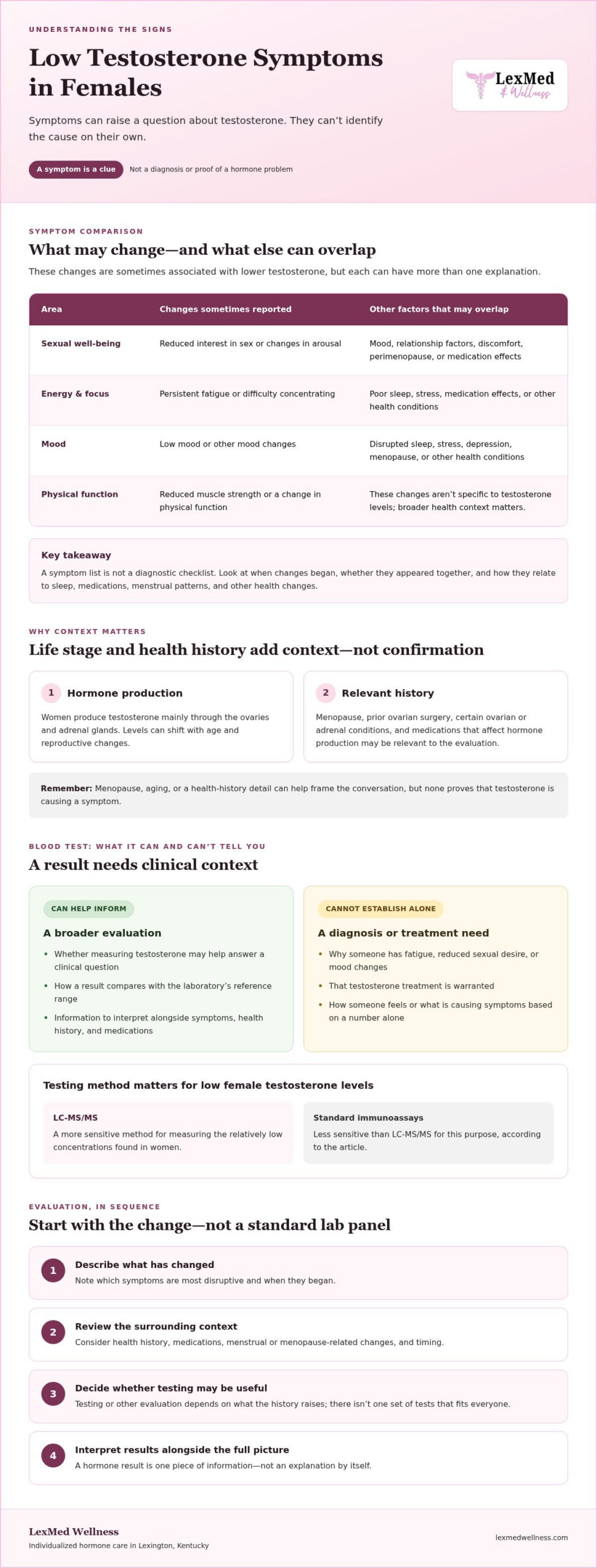
Possible symptoms are often grouped by the area of well-being they affect:
- Sexual well-being: Reduced interest in sex or changes in arousal. Desire and arousal are influenced by many factors, so a change doesn’t point to testosterone alone.
- Energy or mood: Persistent fatigue, low mood, or difficulty concentrating may occur, but these symptoms have a broad range of potential causes.
- Physical changes: Some people notice reduced muscle strength or changes in physical function. These changes aren’t specific to hormone levels either.
These are possible associations, not a checklist or diagnostic criteria. A general overview of androgen deficiency in women discusses symptoms such as low libido, fatigue, and mood changes, but a symptom list can’t establish what’s causing them.
Can symptoms alone show that testosterone is low?
No single symptom confirms low testosterone in a woman. Similar concerns can arise with menopause, stress, disrupted sleep, medication effects, or other health conditions. Fatigue, for example, may be related to poor sleep, while reduced sexual desire can be affected by mood, relationship factors, discomfort, or perimenopause.
Noticing a change is a reason to explore its timing and context, not to self-diagnose. Consider whether symptoms began together, followed a medication change, or coincide with changes in sleep or menstrual patterns. These details can make a medical conversation more focused and help guide whether further evaluation is useful.
Why might testosterone levels change in women?
Women produce testosterone, mainly through the ovaries and adrenal glands. Levels can shift with age and reproductive changes, but a change in life stage doesn’t establish that testosterone is causing a symptom. The Cleveland Clinic’s overview of low testosterone in women describes possible influences, including health history and changes in hormone production.
How can menopause and health history affect the picture?
Testosterone levels may change over time, and menopause can bring symptoms that overlap with concerns sometimes attributed to testosterone. That overlap makes timing and the full health picture useful, but not conclusive. Prior ovarian surgery, certain ovarian or adrenal conditions, and medications that affect hormone production may also be relevant. These details help frame an evaluation; they don’t identify the cause by themselves.
A hormone result only becomes meaningful when interpreted alongside symptoms, medical history, and relevant medications. A number by itself doesn’t explain how someone feels or establish a diagnosis.
Does low testosterone explain fatigue or mood changes?
Not necessarily. Fatigue and mood changes have many possible causes, including disrupted sleep, stress, medication effects, depression, or other health conditions. Menopause may also affect sleep and mood, making it difficult to attribute a change to one hormone based on symptoms alone. The signs and symptoms of low testosterone in females are possible clues, not proof of a specific hormone problem.
If menopause symptoms are part of your concern, LexMed Wellness offers individualized hormone care in Lexington, Kentucky. Learn more about hormone therapy for menopause and how a provider-led evaluation considers symptoms and health history together.
How is low testosterone evaluated, and what can a blood test tell you?
Evaluation starts with a conversation, not a standard lab panel. The clinician reviews what has changed, when symptoms began, relevant health history, and medications. From there, you can decide whether testosterone testing or another part of the evaluation may help answer the question.
What should a careful evaluation consider?
Timing matters. A change in sexual desire or energy may line up with menstrual changes, menopause, a new medication, or another shift in health. The discussion may also cover your goals and which symptoms are most disruptive. An examination or additional tests depend on what the history raises; there isn’t one set of tests that fits everyone.
If testosterone is measured, the result needs context, including the lab’s reference range and testing method. Measuring the relatively low concentrations found in women can be challenging. Liquid chromatography-tandem mass spectrometry (LC-MS/MS) is a more sensitive method than standard immunoassays for this purpose.
What does a testosterone result not prove?
A result alone doesn’t establish why someone has fatigue, reduced sexual desire, or mood changes. Nor does a number automatically show that testosterone treatment is warranted. Test interpretation depends on the clinical context and the laboratory method. Unexpected results should be reviewed alongside symptoms and health history with a medical professional.
If your concerns coincide with changes in your menstrual cycle or other transition-related symptoms, explore perimenopause care. LexMed Wellness offers individualized hormone care in Lexington, Kentucky, where a provider-led conversation can put symptoms and relevant findings into context.
What should you do if you are concerned about low testosterone?
If changes in sexual well-being or daily functioning persist or concern you, bring them up at a medical appointment. A short timeline can help: note when symptoms began, how they’ve changed, and whether they coincide with menstrual changes, menopause, disrupted sleep, or a medication change. Bring your medication list and questions, too. This article is educational and can’t replace an evaluation of your health and goals.
How are treatment decisions made?
Treatment depends on what may be causing the symptoms, relevant examination or lab findings, available evidence, potential risks, and your preferences. Testosterone isn’t a routine treatment for fatigue, mood changes, or a low lab result alone. Current consensus guidance identifies hypoactive sexual desire disorder in postmenopausal women as the only evidence-supported indication. In the United States, testosterone products aren’t FDA-approved specifically for use in women, so prescribing is off-label.
If therapy is discussed, the conversation should include limits in long-term safety evidence and monitoring. Testosterone levels are followed to help avoid concentrations above the normal premenopausal range. Compounded products can also have less predictable dose and consistency. The signs and symptoms of low testosterone in females don’t, by themselves, determine whether treatment is suitable.
How can Lexington-area patients explore hormone care?
LexMed Wellness is a Lexington, Kentucky clinic offering provider-led, individualized hormone care. Owned and operated by Miranda Hagan, MSN, APRN, PMHNP-BC, FNP-C, the practice considers symptoms and health history in context rather than treating a lab value in isolation. If menopause-related concerns are part of the picture, you can explore menopause treatment in Lexington as a starting point for learning about care options.
Take the next step with a clearer picture
The signs and symptoms of low testosterone in females can raise a question, but they can’t identify the cause on their own. Changes in desire, energy, mood, or physical function may have several explanations, and a testosterone result needs to be interpreted alongside symptoms, health history, and the laboratory method.
If these changes persist or affect your well-being, bring a symptom timeline, medication list, and questions to a medical appointment. The goal is to understand what may be contributing and discuss next steps based on relevant findings, evidence, potential risks, and your goals, rather than assume a hormone diagnosis from a symptom or lab value.
LexMed Wellness is a Lexington, Kentucky clinic owned and operated by Miranda Hagan, MSN, APRN, PMHNP-BC, FNP-C. The practice provides individualized hormone replacement therapy and provider-led conversations about hormone concerns. LexMed Wellness serves patients in Lexington and communities including Georgetown, Nicholasville, Louisville, Winchester, and Danville. If menopause symptoms are part of your picture, explore individualized menopause and hormone care in Lexington. Schedule an evaluation with LexMed Wellness to discuss your symptoms and hormone care options.
Frequently Asked Questions
Can low testosterone cause fatigue in females?
Fatigue can occur alongside low testosterone, but it isn’t a specific sign. Sleep difficulties, stress, mood changes, medication effects, menopause-related changes, and other health conditions can also contribute. If fatigue persists or affects daily life, a broader review can help identify possible causes.
Is low testosterone common in women?
Women naturally produce testosterone, but a symptom or lab result alone doesn’t establish a defined low-testosterone condition. Levels and symptoms vary, and low energy or mood shifts don’t automatically mean testosterone is deficient. A medical review can consider hormone-related and other explanations.
How is low testosterone diagnosed in females?
Evaluation generally begins with symptoms, health history, medications, and life-stage context, such as menstrual or menopause changes. Testing may help answer a specific clinical question, but results must be interpreted alongside the full picture and the laboratory method. No symptom checklist or single number confirms the cause.
Does menopause cause low testosterone in women?
Testosterone levels can change with age and health context, but menopause symptoms don’t automatically mean testosterone is low. Discussing when symptoms began, menstrual changes, and other menopause-related concerns can help clarify what to evaluate.
Is testosterone therapy recommended for every woman with low libido?
No. Low sexual desire can have many causes, and a low testosterone result alone doesn’t mean treatment is suitable. Current guidance supports testosterone use only in a limited clinical context, including postmenopausal women with diagnosed hypoactive sexual desire disorder. In the U.S., testosterone products aren’t FDA-approved specifically for women, so use is off-label and requires discussion of evidence limits, potential risks, and monitoring. Don’t self-treat based on an online symptom list.