

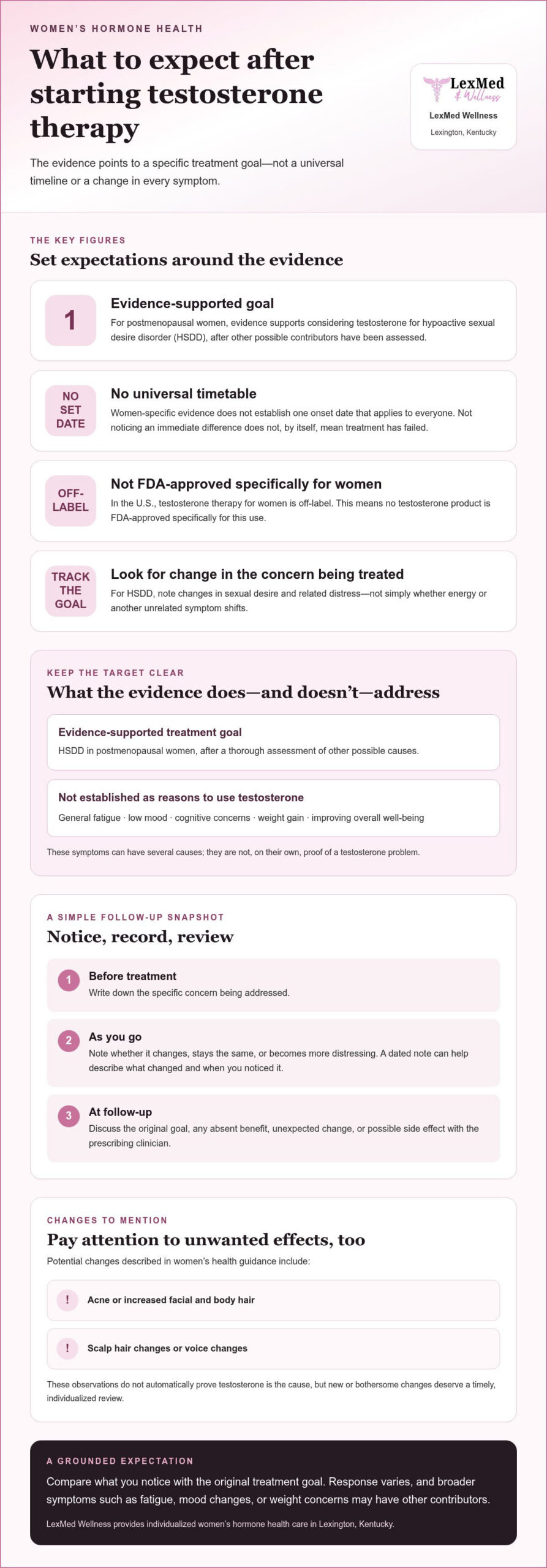
There’s no universal testosterone timeline, and treatment isn’t expected to change every symptom. What women can expect after starting testosterone therapy depends on the reason for treatment. In the U.S., testosterone isn’t FDA-approved specifically for women; its evidence-supported use in postmenopausal women is for hypoactive sexual desire disorder (HSDD), after other possible contributors have been assessed.
People searching “what to expect after starting testosterone therapy female” are often looking for a clear list of changes and when they might happen. In practice, response varies, and potential benefits need to be weighed against possible effects such as acne or increased hair growth. This article covers which changes may be relevant, why timing differs, and what to discuss at follow-up if you don’t notice a change.
For women in Lexington and Central Kentucky, questions about testosterone fit into a broader conversation about symptoms, health history, and treatment goals. LexMed Wellness provides women’s hormone health care in Lexington, Kentucky, with an individualized, provider-led approach. The goal is a realistic discussion grounded in evidence, not broad promises about what treatment will do.
Key Takeaways
- Learn what women may notice after starting testosterone therapy, while keeping in mind that response and timing vary.
- Understand which treatment goal has evidence behind it and why testosterone isn’t a catch-all for fatigue, mood, weight, and desire.
- No immediate change doesn’t, by itself, mean treatment has failed. Track what you notice and discuss it at follow-up.
- Be prepared to discuss the treatment goal, potential benefits and uncertainties, side effects, and a follow-up plan with the prescribing clinician.
What does testosterone therapy mean for women, and what is it intended to address?
The effects depend on the reason for treatment and the person receiving it. In the U.S., testosterone therapy for women is off-label, meaning no testosterone product is FDA-approved specifically for this use. The evidence-supported indication for postmenopausal women is hypoactive sexual desire disorder (HSDD), a persistent, distressing lack of sexual desire assessed after other possible causes have been considered.
Which treatment goal is relevant to women?
Start by identifying a specific concern that is distressing and affecting quality of life. Current international guidance supports considering testosterone for postmenopausal women with HSDD after a thorough assessment. It doesn’t support using testosterone to treat general fatigue, low mood, cognitive concerns, weight gain, or to improve overall well-being. These symptoms can have several causes, so they shouldn’t be treated as proof of a testosterone problem.
When considering what to expect after starting testosterone therapy, first clarify the intended treatment goal and the evidence for it. The Global Position Statement on Testosterone Therapy for Women summarizes the evidence and its limits. It doesn’t guarantee an individual benefit or timeline.
Why does context matter?
Menopause-related testosterone discussions and gender-affirming hormone therapy have different goals and clinical contexts. Information about changes during gender-affirming care shouldn’t be used to predict what a postmenopausal woman may experience. Studies in men also can’t establish a timeline for women because the populations, treatment goals, and evidence differ.
For Lexington-area patients, menopause symptoms and treatment goals are considered within the broader health picture. LexMed Wellness offers individualized women’s hormone health care in Lexington, Kentucky. An evaluation can help distinguish a focused concern from broader symptoms that may have another explanation or need a different care plan. Patients from Georgetown, Nicholasville, Louisville, Winchester, and Danville can also seek care at the Lexington clinic.
What changes might you notice after starting testosterone therapy?
There’s no reliable, universal timetable for what a woman will notice. For postmenopausal women treated for HSDD, the evidence focuses on sexual desire and related distress, not a general boost in energy or well-being. The Global Position Statement on Testosterone Therapy for Women describes the evidence and its limits. A change in the concern being treated is more meaningful than a shift in an unrelated symptom.
How should you think about the first weeks and months?
Focus on observing changes and reviewing them at follow-up, not on reaching a promised milestone. Women-specific evidence doesn’t establish a single onset date that applies to everyone. Timelines reported in studies of men shouldn’t be used to predict a woman’s response. Not noticing an immediate difference doesn’t, by itself, mean treatment has failed. The intended outcome, treatment plan, and individual response all matter when interpreting changes.
Compare what you notice with the original treatment goal rather than expecting several symptoms to improve together.
Which changes are useful to track?
Before treatment, note the specific concern being addressed. At follow-up, describe whether it has changed, stayed the same, or become more distressing. If the goal relates to desire, observations about interest and distress may be more useful than a general rating of energy. Also note new or unwanted changes without assuming testosterone caused them.
A dated note of the concern, any changes, and when you noticed them can make follow-up more focused. If menopause symptoms are part of a broader concern, LexMed Wellness provides individualized menopause care in Lexington, Kentucky through its menopause treatment services.
What if the changes are absent, unexpected, or concerning?
No clear benefit or an unwanted change is a reason to review the plan, not to assume what caused it. Testosterone isn’t expected to resolve fatigue, weight concerns, mood changes, and sexual desire all at once. For postmenopausal women, the evidence-supported treatment goal is specific. Fatigue, for example, can have causes unrelated to testosterone. The women’s health guidance on testosterone use and side effects describes potential changes such as acne and increased facial or body hair. Report new or bothersome effects rather than trying to diagnose them yourself.
Why might the expected benefit not appear?
Response varies, and the original concern may have more than one contributor. Desire, for example, can be affected by health conditions, medications, relationship factors, sleep, and menopause-related symptoms. A careful review may consider medical history, current symptoms, examination findings, medications, treatment goals, and lab testing when indicated. A test result alone doesn’t establish why a symptom is happening or predict exactly how treatment will feel.
At follow-up, revisiting the original goal helps clarify whether the concern has changed and whether the plan still makes sense.
What should prompt a follow-up conversation?
Bring up an absent benefit, an unexpected change, or a possible side effect with the clinician who prescribed treatment. Examples include persistent acne, new facial hair, scalp hair changes, or voice changes. These observations don’t automatically prove testosterone is the cause, but they deserve a timely, individualized review. Medication changes require guidance from the prescriber.
Questions about what female patients can expect after starting testosterone therapy are best considered alongside the specific goal, health history, and changes noticed. For menopause-related concerns in Central Kentucky, LexMed Wellness offers individualized menopause care in Lexington, KY. Explore menopause care in Lexington as part of a broader conversation about symptoms and treatment goals.
How can you make a thoughtful plan for testosterone therapy in women?
A thoughtful plan starts with a specific concern, checks whether evidence supports testosterone for that goal, and sets expectations for reviewing both benefits and unwanted changes. Because testosterone use in women is off-label in the U.S., the conversation should include what remains uncertain as well as what someone hopes to improve. Online descriptions of what to expect after starting testosterone therapy shouldn’t take the place of a plan built around a person’s health and goals.
What belongs in an informed treatment discussion?
Bring up the concern that matters most and how it affects daily life. A provider-led evaluation can consider symptoms, medical history, examination findings, medications, risk factors, and relevant lab testing when indicated. Testing isn’t the same for everyone, and a lab value alone doesn’t determine whether treatment is suitable. The discussion should clarify the intended benefit, possible unwanted effects, uncertainties, and when the plan will be reviewed.
For menopause-related questions, LexMed Wellness provides individualized women’s hormone health services in Lexington, Kentucky. Its hormone therapy for menopause guide offers context on menopause treatment, but it doesn’t establish whether testosterone is suitable for a particular person. Keeping the goal specific can help separate a focused treatment question from broader concerns that need their own evaluation.
Where can Lexington-area patients explore women’s hormone care?
Lexington-area patients can explore women’s hormone care at LexMed Wellness, a Lexington, Kentucky clinic owned and operated by Miranda Hagan, MSN, APRN, PMHNP-BC, FNP-C, a double board-certified Nurse Practitioner in Family Medicine & Psychiatric Mental Health. Care includes a comprehensive evaluation, personalized treatment plans, and ongoing support. Patients can discuss menopause-related symptoms and options without assuming a particular testosterone protocol or outcome.
If you’re in Lexington or Central Kentucky and want to discuss menopause-related hormone questions, explore women’s hormone care at LexMed Wellness.
Bring your questions into a personalized care conversation
There isn’t one timeline that can predict how every woman will respond. A more useful question than “what to expect after starting testosterone therapy female” is: what change is treatment intended to support, and how will you and your prescriber decide whether that goal is being met? Clear expectations make it easier to discuss uncertainty, notice meaningful changes, and revisit the plan if your experience differs from what you hoped.
If you’re considering menopause-related hormone care in Lexington, start with the concern you most want to address and the questions you’d like answered. LexMed Wellness offers individualized women’s hormone health care in Lexington, Kentucky. A provider-led evaluation can help you discuss your symptoms and options without assuming testosterone is the right choice for everyone.
Explore women’s hormone health care in Lexington and discuss your menopause-related questions with LexMed Wellness.
Frequently Asked Questions
How long does it take to notice changes after starting testosterone therapy as a woman?
There isn’t a single timeline that applies to every woman. Research on testosterone for postmenopausal women with HSDD focuses on a specific treatment goal, not a predictable schedule for all symptoms or formulations. Track changes in the concern being treated and review them with the prescriber at follow-up.
Can testosterone therapy improve low sexual desire in women?
It can improve sexual desire for some postmenopausal women diagnosed with HSDD after a thorough assessment. This is the evidence-supported indication described in international guidance, but it doesn’t mean testosterone will help everyone with low desire. Health, medications, menopause symptoms, and relationship or emotional factors can also affect desire, and results aren’t guaranteed.
What happens if I don’t notice a change after starting testosterone therapy?
Discuss the treatment goal and your experience with the prescribing clinician rather than changing the dose on your own. Consider whether the original concern has shifted, stayed the same, or become more distressing. The review can also address other possible contributors and whether further evaluation or a different approach is warranted.
Is testosterone therapy for women the same as gender-affirming testosterone therapy?
No. Menopause-related testosterone care and gender-affirming hormone therapy have different goals and evidence contexts. Expected changes in gender-affirming care shouldn’t be used to predict effects for a postmenopausal woman treated for low sexual desire.
Can testosterone therapy address fatigue, weight changes, and mood symptoms in women?
Current guidance doesn’t support testosterone as a treatment for general fatigue, weight loss, mood improvement, or overall well-being in women. These concerns can have different or overlapping causes, including health conditions, medications, sleep, and menopause-related changes. Describe them separately during an evaluation so each can be considered in context.