

Hormonal changes are a natural part of life, but the symptoms that accompany them—like persistent fatigue, unexplained weight gain, and mental fog—can significantly impact your daily well-being. Many individuals in Lexington and across Central Kentucky seek solutions that align with their body’s natural processes. Bioidentical hormone replacement therapy (BHRT) is a clinical approach designed to address these concerns by supplementing hormones that are structurally identical to the ones your body produces.
This guide provides a clear, medically-grounded overview of bioidentical hormone therapy, explaining how it works, who may be a suitable candidate, and what to expect from a personalized treatment plan at LexMed & Wellness. Our goal is to provide the information you need to have an informed discussion with a healthcare provider about improving your health.
What Are Bioidentical Hormones and How Do They Work?
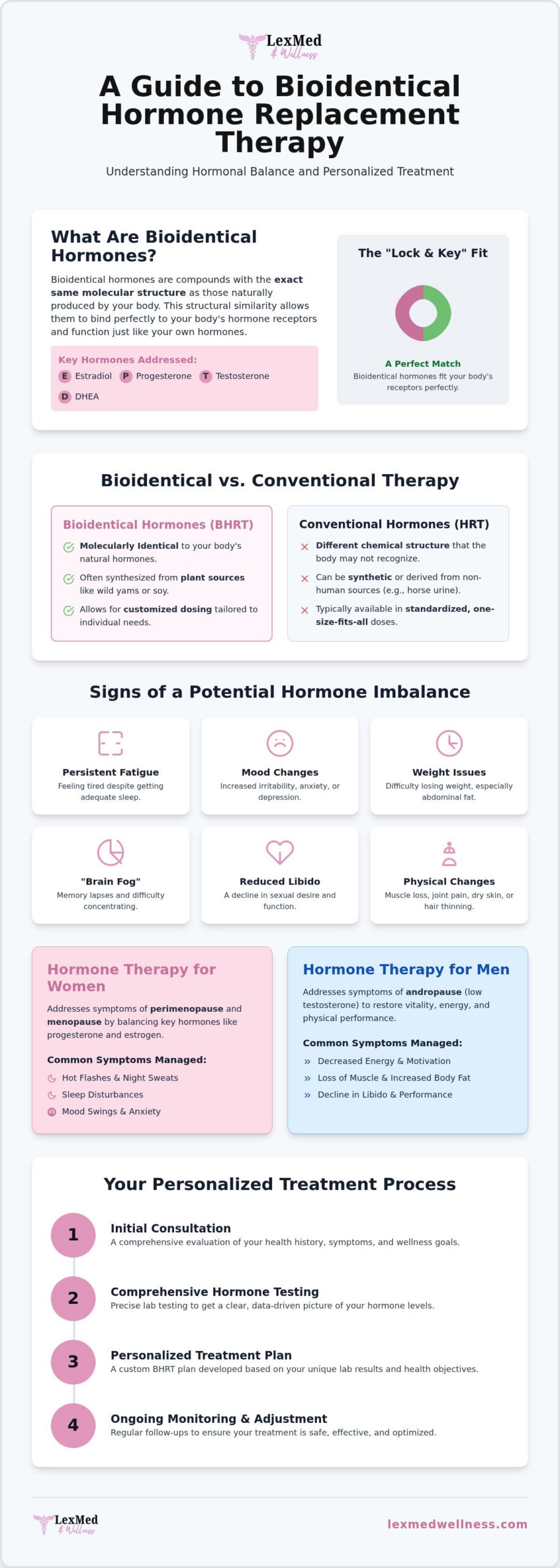
Bioidentical hormones are compounds that have the exact same molecular structure as the hormones naturally produced by the human body. This structural similarity is the key characteristic that defines them. The primary hormones used in BHRT include estradiol, progesterone, and testosterone.
- Definition: Hormones that are molecularly identical to endogenous hormones like estrogen, progesterone, and testosterone.
- The ‘Lock and Key’ Analogy: Because they share an identical molecular structure, bioidentical hormones can bind to your body’s hormone receptors in the same way your natural hormones do, much like a specific key fits a specific lock.
- Common Sources: These hormones are often synthesized from plant-based sources, such as wild yams or soy, and then processed in a lab to match human hormones precisely.
- Key Hormones Addressed: Treatment commonly focuses on balancing estradiol, progesterone, testosterone, and sometimes DHEA to alleviate symptoms of deficiency or imbalance. Specialists like Jace Wellness also provide comprehensive medical reviews for conditions like growth hormone deficiency to ensure a complete approach to endocrine health.
Bioidentical vs. Other Hormone Therapies
The term “bioidentical” refers specifically to the molecular structure of the hormone. This differs from some conventional hormone replacement therapies (HRT) that may use hormones with a different chemical makeup, such as conjugated equine estrogens (derived from horse urine) or synthetic progestins (medroxyprogesterone acetate).
While some bioidentical hormones are available in FDA-approved, commercially manufactured products, others are custom-mixed by compounding pharmacies. This process, known as compounding, allows a provider to prescribe specific doses and delivery methods tailored to an individual’s needs. It is important for patients to understand that custom-compounded bioidentical hormones are not individually tested or approved by the FDA, though the active ingredients used are often FDA-approved. The decision between a commercially available product and a compounded one is based on your specific clinical needs and goals, determined in consultation with your provider.
The Goal: Achieving Appropriate Hormone Levels
The objective of any hormone therapy is not just to fall within a broad “normal” lab range but to achieve a level that alleviates your specific symptoms and improves your quality of life. This involves moving from a deficient state to a level that is appropriate for you, based on a combination of lab results, symptom evaluation, and medical history. Effective BHRT supports the body’s endocrine function by restoring hormones to more youthful and balanced levels under careful medical supervision.
Signs and Symptoms of Hormone Imbalance
Hormone fluctuations can cause a wide range of physical and psychological symptoms in both men and women. These changes often develop gradually, making it easy to dismiss them as normal signs of aging. However, they can significantly detract from your health and vitality. Recognizing these signs is the first step toward addressing the underlying imbalance.
- Persistent Fatigue: Feeling tired despite getting adequate sleep.
- Cognitive Difficulties: Experiencing “brain fog,” memory lapses, or difficulty concentrating.
- Mood Changes: Increased irritability, anxiety, or feelings of depression.
- Weight Management Issues: Difficulty losing weight, especially around the abdomen, despite diet and exercise.
- Reduced Libido: A noticeable decline in sexual desire and function.
- Physical Changes: Muscle loss, joint pain, dry skin, and hair thinning.
Hormone Therapy for Women: Addressing Perimenopause and Menopause
For women, hormone decline typically begins during perimenopause, the years leading up to menopause. Symptoms like hot flashes, night sweats, and vaginal dryness are common, but so are less-discussed issues like sleep disturbances and mood swings. Progesterone, often one of the first hormones to decline, plays a crucial role in sleep quality and mood stability. Thoughtfully prescribed menopause hormone therapy can help manage these symptoms and improve overall well-being during this transition.
Hormone Therapy for Men: Addressing Andropause
Men experience a gradual decline in testosterone, a condition often referred to as “andropause.” This can lead to decreased energy, loss of muscle mass, increased body fat, and a decline in motivation and libido. Low testosterone levels can also impact bone density and cardiovascular health. For men experiencing these symptoms, testosterone therapy for men in Lexington can be an effective treatment to restore vitality and physical performance.
The LexMed & Wellness Process: Your Personalized Treatment Plan
Effective hormone replacement therapy is not a one-size-fits-all solution. At LexMed & Wellness, we follow a detailed, patient-centered process to ensure your treatment is safe, effective, and tailored to your unique physiology and health goals.
Your Initial Consultation
Your first visit is a comprehensive evaluation with Miranda Hagan, MSN, APRN. This is a dedicated time to discuss your health history, current symptoms, and what you hope to achieve. We will review your lifestyle, nutrition, and any previous treatments. This in-depth conversation is the foundation of your personalized plan and allows us to understand the complete picture of your health.
Comprehensive Hormone Testing in Lexington
To get a precise understanding of your hormonal status, we utilize advanced diagnostic testing. This typically involves a comprehensive blood panel that looks beyond just total hormone levels to assess free (usable) hormone levels, carrier proteins, and other important health markers. We believe an “optimal range” is a personalized metric, defined by the level at which your symptoms resolve and you feel your best, not just by a standard laboratory reference.
Customized Delivery Methods
Based on your lab results, lifestyle, and personal preference, we will recommend the most appropriate delivery method for your hormones.
- Pellet Therapy: Small, custom-compounded pellets inserted under the skin provide a steady, consistent release of hormones over several months, avoiding the daily fluctuations of other methods.
- Topical Creams: Applied daily to the skin, creams offer a non-invasive way to deliver hormones directly into the bloodstream.
- Injections: Typically used for testosterone therapy in men, injections allow for precise dosing on a weekly or bi-weekly schedule.
Ongoing Monitoring and Dose Adjustments
Hormone therapy requires careful and consistent follow-up. We schedule regular appointments to monitor your progress, review your symptoms, and perform follow-up lab work. This allows us to make precise adjustments to your treatment plan as needed, ensuring you continue to receive the right dose for your body. This commitment to ongoing management is essential for both safety and long-term success.
Is BHRT Right for You? Candidacy and Safety Considerations
While BHRT can be highly effective for many, it is not suitable for everyone. A thorough medical evaluation is necessary to determine if you are a good candidate. Your provider will conduct an individualized risk assessment, weighing the potential benefits against any potential risks based on your personal and family health history.
BHRT may not be recommended for individuals with a history of:
- Certain hormone-sensitive cancers (such as breast, ovarian, or uterine cancer)
- A history of blood clots (deep vein thrombosis or pulmonary embolism)
- Unexplained or abnormal vaginal bleeding
- Severe or active liver disease
- A history of heart attack or stroke
According to organizations like The North American Menopause Society (NAMS), the decision to use hormone therapy should be individualized. At LexMed & Wellness, patient safety is our top priority. We adhere to evidence-based guidelines and ensure every patient undergoes a comprehensive evaluation before beginning treatment.
Why Choose LexMed & Wellness for BHRT in Lexington, KY?
Choosing a provider for hormone therapy is an important decision. At LexMed & Wellness, we offer a unique combination of clinical expertise, a personalized approach, and a commitment to your long-term health. Our practice serves patients from Lexington, Georgetown, Nicholasville, Richmond, Winchester, and throughout Central Kentucky.
- Expertise and Empathetic Care: Miranda Hagan, MSN, APRN, combines deep clinical knowledge with a supportive, patient-first approach. She takes the time to listen to your concerns and works with you to develop a plan that fits your life.
- A Boutique, High-Touch Practice: We intentionally maintain a smaller practice to ensure every patient receives the attention they deserve. You are a partner in your healthcare, not just a number on a chart.
- Integrated Wellness Solutions: We understand that hormones are just one piece of the puzzle. We often integrate BHRT with other services, such as our medical weight loss programs or peptide therapy, to support your overall health.
Your Partner in Health
At LexMed & Wellness, we view ourselves as your long-term partner in health. Our goal is to empower you with the tools and medical support you need to feel your best. We believe in shared decision-making and are committed to helping you navigate your health with confidence.
If you are in Lexington, KY, or the surrounding Central Kentucky communities and are ready to address symptoms of hormone imbalance, we invite you to schedule an evaluation. Contact LexMed & Wellness today to begin the process of restoring your hormonal balance and improving your quality of life.
Frequently Asked Questions About BHRT
- How is BHRT different from TRT?
- BHRT (Bioidentical Hormone Replacement Therapy) is a broad term for replacing hormones like estrogen, progesterone, and testosterone with bioidentical versions. TRT (Testosterone Replacement Therapy) is a specific type of BHRT that focuses solely on correcting low testosterone levels, primarily in men.
- How often are hormone levels checked?
- After starting therapy, we typically re-check hormone levels within the first few months to ensure your dose is correct. Once your levels are stable and your symptoms have improved, monitoring is usually done annually or as clinically needed.
- Can I continue BHRT long-term?
- The duration of hormone therapy is an individualized decision made between you and your provider. It depends on your treatment goals, your response to therapy, and an ongoing assessment of your health. Many patients continue therapy long-term with regular monitoring.
- What if my hormone levels are “normal” but I still have symptoms?
- Standard laboratory “normal” ranges are very broad and may not represent the optimal level for you as an individual. We treat the patient, not just the lab number. If you are symptomatic, a thorough evaluation may reveal an imbalance that can be addressed even if your levels fall within the standard range.
- Are compounded bioidentical hormones FDA-approved?
- Individual preparations of compounded hormones are not approved by the FDA. The FDA does not review or approve specific compounded drug formulations for safety or efficacy. However, the active pharmaceutical ingredients used by reputable compounding pharmacies are often sourced from FDA-registered facilities. Compounding is used when a patient requires a specific dose or delivery method not available in a commercially manufactured, FDA-approved product.