

What if a dip in confidence during menopause reflects what you’re dealing with, not who you are? If you feel unlike yourself as sleep, mood, or daily routines change, you’re not alone in wondering whether menopause could be part of the picture. Learning how to feel more confident during menopause starts with recognizing that symptoms may affect how you feel without defining your worth.
Menopause can overlap with sleep disruption, hot flashes, mood changes, and stress, but these experiences can have more than one cause. Noticing a change doesn’t mean you need to diagnose yourself, or that asking for help will lead to your concerns being dismissed or overmedicalized.
This article explores practical ways to feel more grounded, understand what might be contributing, and decide when a medical conversation could help. LexMed Wellness, a Lexington, Kentucky clinic offering individualized menopause care, recognizes that confidence and wellbeing are personal parts of the transition. You deserve clear information and support that takes your concerns seriously.
Key Takeaways
- Confidence can shift during menopause, but it’s a personal experience, not a diagnosis or an inevitable outcome.
- Sleep, symptoms, emotional wellbeing, body changes, and social pressures may all play a role. Notice what’s affecting you before deciding what support might help.
- Learning how to feel more confident during menopause can start with one manageable change that addresses a specific symptom or situation.
- If changes are affecting daily life, menopause care in Lexington can offer a chance to review your concerns and explore an individualized plan.
Why menopause can affect confidence, and why it is not the whole story
Menopause can affect confidence when symptoms or changing routines make everyday life feel less manageable. Poor sleep may leave you less patient at work; hot flashes may make social situations uncomfortable; changes in mood or body image can influence how you see yourself. These experiences can shape self-perception, but they don’t define your worth. Confidence changes are a personal experience, not a diagnosis or an inevitable part of menopause.
Can menopause change how you see yourself?
It can. Disruptive symptoms may interfere with plans, relationships, concentration, or the ease you once felt in familiar settings. Someone who starts avoiding meetings because of unpredictable symptoms might feel less capable, even though the situation says nothing about their skills. Others notice little or no change in confidence. There’s no single way menopause is supposed to feel. ACOG’s overview of menopause offers background on its stages and possible physical and emotional experiences.
Why confidence changes deserve a wider view
Hormonal changes may be part of the picture, but they aren’t the only possible explanation. Stress, caregiving, relationship changes, health concerns, medication effects, or other conditions can also influence mood, sleep, and self-image. Similar symptoms can have different causes, so a dip in confidence alone can’t establish that menopause is responsible.
Look for context rather than a single explanation. When did the change begin? Does it fluctuate alongside sleep disruption, hot flashes, or menstrual changes? Have work demands, health, or responsibilities shifted too? Noticing timing and patterns can help you describe what’s changed without self-diagnosing. It may also clarify what kind of support you want, whether that’s addressing a disruptive symptom or discussing broader wellbeing.
If menopause symptoms are affecting daily life, a provider-led conversation can help you review possible contributors and discuss options. Information about hormone therapy for menopause can be one starting point for learning about symptom treatment; it isn’t right for everyone, and decisions depend on personal health factors and goals.
What may be behind a dip in confidence during menopause?
A change in confidence can have several overlapping contributors. Menopause symptoms may play a part, but feeling less sure of yourself doesn’t prove that menopause is the sole cause. Sleep, emotional wellbeing, body changes, health concerns, and pressures at home or work can interact, making it hard to identify one explanation without looking at the pattern over time.
How symptoms and daily life can interact
Interrupted sleep may leave everyday tasks feeling more demanding, while bothersome hot flashes can make a meeting, commute, or social event uncomfortable. If those experiences recur, you might start changing plans or worrying about how others perceive you. That reaction is understandable, but it doesn’t mean your confidence or abilities have permanently changed. For practical information about symptom-specific support, see the LexMed Wellness hot flashes page.
Body changes can also affect self-image, while anxiety or low mood may influence motivation and how you interpret ordinary setbacks. These experiences can occur during perimenopause or menopause, but they can also relate to other health or life factors. No single symptom, or hormone level by itself, explains everyone’s experience. That’s why the question of how to feel more confident during menopause is best approached by first identifying what has changed for you.
What a thoughtful evaluation can clarify
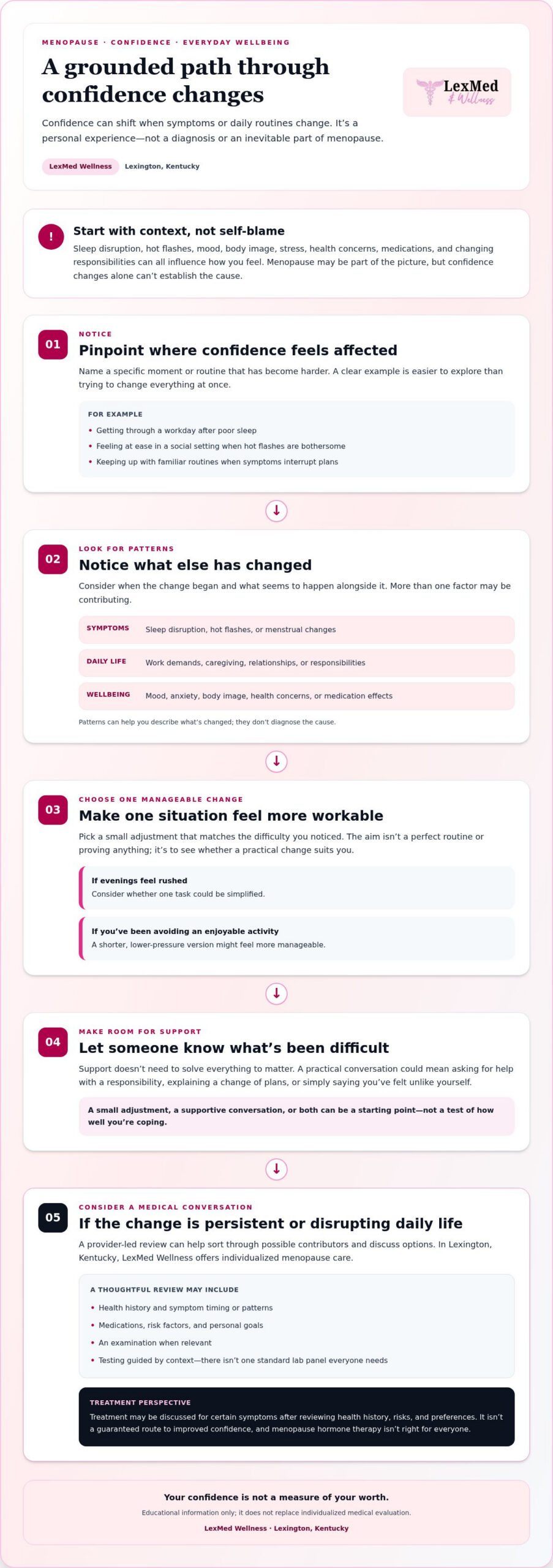
If a change feels persistent, troubling, or disruptive to daily life, a medical conversation can help sort through possible contributors. A thoughtful review may cover your health history, symptom timing and patterns, medications, risk factors, examination when relevant, and personal goals. Testing is guided by that context; there isn’t one standard lab panel everyone needs.
Treatment is one possible part of the conversation, not a guaranteed route to improved confidence. For example, menopause hormone therapy may be discussed for certain symptoms after reviewing health history, risks, and preferences. The aim is to understand what matters most to you and consider options with care.
Boosting Confidence During Menopause: Practical Steps
Confidence doesn’t have to return all at once. A useful starting point is to notice where it feels most affected: getting through a workday after poor sleep, feeling at ease in social settings, or keeping up with routines when symptoms interrupt your plans. Naming the specific situation can make support feel more manageable than trying to change everything at once.
Start with one manageable change
Choose a small adjustment that fits the problem you’ve noticed. If evenings feel rushed, could one task be simplified? If you’ve been withdrawing from an enjoyable activity, might a shorter, lower-pressure version feel possible? The aim isn’t to follow a perfect routine or prove anything. It’s to make daily life feel a little more workable, then notice whether the change suits you.
If symptoms began before your periods stopped, they may be part of perimenopause. Lexington-area readers can learn about perimenopause care and the kinds of concerns that may be discussed.
Make room for support and self-respect
Consider sharing what’s been difficult with someone you trust. A practical conversation might mean asking for help with a responsibility, explaining why you’re changing a plan, or simply letting someone know you’ve felt unlike yourself. Support doesn’t need to solve everything to matter.
Confidence isn’t measured only by appearance, productivity, or having no symptoms. You can value yourself while working through a hard stretch. To make a future care conversation more useful, jot down the symptoms or situations that affect you, when they tend to happen, and what you’d most like to improve. Include questions that come up; a brief record can help you describe your experience without needing to have all the answers.
If menopause symptoms are affecting your confidence or daily routines, explore individualized menopause care at LexMed Wellness in Lexington.
When menopause care may help, and what to expect in Lexington
Menopause care is an option if symptoms are troubling, persistent, or making daily life harder. You don’t need to wait until they feel unmanageable, and seeking care doesn’t mean you must choose medication. The purpose is to understand what’s happening and consider support that fits your health and priorities. Treatment may ease specific symptoms, but it can’t guarantee a change in confidence.
What an individualized menopause-care conversation can cover
At LexMed Wellness, care follows three steps: Comprehensive Evaluation, Personalized Treatment Plans, and Ongoing Support. The evaluation may consider your symptom patterns, health history, medications, risk factors, examination when relevant, and personal goals. Testing is guided by the clinical picture, rather than a standard panel for everyone.
Options are tailored to the person. Hormone therapy may be discussed for some menopause symptoms, but it isn’t the right choice for everyone. A conversation about hormone therapy for menopause can include potential benefits, risks, and how personal health factors shape a decision. The aim is a plan based on what matters to you, not a promise that one treatment will solve every concern.
LexMed Wellness is a Lexington, Kentucky wellness clinic owned and operated by Miranda Hagan, MSN, APRN, PMHNP-BC, FNP-C, who is double board-certified in Family Medicine and Psychiatric Mental Health. For people in Lexington and across Central Kentucky, a provider-led conversation can help put changing symptoms and goals into context.
A local next step for Lexington-area readers
If menopause symptoms are affecting your wellbeing, you can explore individualized menopause care in Lexington at your own pace. Learning how to feel more confident during menopause may begin with having your concerns heard and considering support that aligns with your needs.
Let confidence grow at your own pace
You don’t have to feel completely like your former self before you can trust your judgment again. Confidence can begin with making choices that reflect what you need now, including giving yourself permission to adjust expectations, ask for support, or seek clarity about symptoms. Progress may be gradual, and it doesn’t have to look the same from one person to another.
If you’re still wondering how to feel more confident during menopause, consider what would make the next week feel a little more manageable, not what you think you should be able to handle. A personal medical conversation is one option if symptoms continue to affect your wellbeing. You can explore menopause care in Lexington with LexMed Wellness and decide whether that support feels right for you. Your concerns deserve attention, and you can move forward at a pace that feels comfortable.
Frequently Asked Questions
Is it normal to feel less confident during menopause?
It can happen, but it isn’t something everyone experiences. A useful distinction is whether confidence feels different in a particular setting, such as speaking up at work, or has shifted across several parts of life. That detail can help you describe the change clearly and consider what support would be most useful, without treating it as a personal failing.
Can menopause cause low self-esteem?
Menopause may coincide with changes that affect self-esteem, but it can’t be assumed to be the only cause. Consider whether the feeling is tied to a specific concern, such as body image, a relationship strain, or difficulty concentrating, or is more general. That context can help a healthcare conversation address the concern itself rather than assume a single explanation.
How can I feel more like myself during menopause?
To explore how to feel more confident during menopause, choose a small sign of feeling like yourself that you’d value, such as enjoying a favorite hobby or feeling comfortable joining a conversation. Then make that activity easier to try, perhaps by setting aside a shorter block of time or inviting someone supportive. A modest, personally meaningful goal can feel more attainable than expecting an immediate change in mood.
Can menopause treatment improve confidence?
Treatment may help with symptoms that are affecting comfort or everyday functioning, but improved confidence can’t be promised. Menopause care in Lexington at LexMed Wellness is tailored to the person’s health history, concerns, and goals. A useful question to bring to a visit is which specific symptom or difficulty you hope to address, so options can be discussed in relation to that priority.
When should I seek help for confidence changes during menopause?
Consider seeking support if a confidence change leads you to avoid activities that matter to you, affects your work or relationships, or feels hard to manage on your own. You can describe what you’ve stopped doing, what feels different, and when you first noticed it. That information gives a healthcare conversation a practical starting point and helps identify whether further evaluation could be useful.