

If you’re wondering how to improve mood swings during perimenopause, start by tracking what happens around the changes rather than assuming hormones are the only cause. Hormone shifts can play a role, but disrupted sleep, stress, medications, and other health concerns may also affect mood. Noting when symptoms occur and what else is going on can help you identify patterns and decide what support to seek.
At home, try keeping a brief record of mood, sleep, menstrual changes, hot flashes, and stress. A consistent sleep routine, regular movement, and time to unwind may support emotional well-being, though these steps won’t address every cause. A medical evaluation can help clarify possible contributors and care options; it doesn’t automatically mean medication or hormone therapy.
LexMed Wellness is a Lexington, Kentucky clinic providing individualized perimenopause care. An evaluation considers symptoms, health history, medications, and personal goals, rather than treating mood changes in isolation. This guide explains practical steps, how other perimenopause symptoms can affect mood, and when to seek care.
Key Takeaways
- To learn how to improve mood swings during perimenopause, look for patterns in mood, sleep, cycle changes, hot flashes, stress, and medication changes.
- Small daily habits, including supporting sleep, moving regularly, and staying connected with others, may help support emotional well-being.
- Persistent, worsening, or disruptive mood changes deserve attention rather than being automatically attributed to hormonal shifts.
- Care options serve different purposes; treatment decisions are guided by symptoms, health history, risks, and personal goals.
Why perimenopause can affect mood, and what else may be involved
Perimenopause is the transition leading up to menopause, when menstrual patterns and hormone levels can fluctuate. Irritability or feeling unusually low can occur during this phase, but mood changes aren’t inevitable and don’t, on their own, establish a diagnosis. A possible perimenopause symptom is something a person may experience, not proof that perimenopause is its cause. For a broad overview of the stages, see perimenopause.
Hormonal shifts may coincide with emotional changes. Sleep disruption and life stress can also affect mood and the ability to cope day to day. That overlap is why it helps to look at timing, other symptoms, and recent changes in your life or health instead of attributing every difficult day to hormones.
How sleep disruption and other symptoms can affect emotional well-being
Hot flashes or night sweats can wake you repeatedly. Interrupted sleep may leave you more tired and make stress or frustration harder to manage the next day, even when sleep isn’t the only factor affecting mood. If heat or sweating is disturbing your rest, learn more about hot flashes and related symptoms.
Why mood changes are not automatically just hormones
Anxiety, depression, thyroid conditions, medication effects, and life stress can overlap with perimenopause symptoms. For example, a recent medication change may be relevant alongside changes in sleep or menstrual patterns. Consider when the mood changes started, what else changed around that time, and whether the symptoms are affecting daily life. If they persist or feel out of character, a medical assessment can consider those details together.
How to improve mood swings during perimenopause with practical daily steps
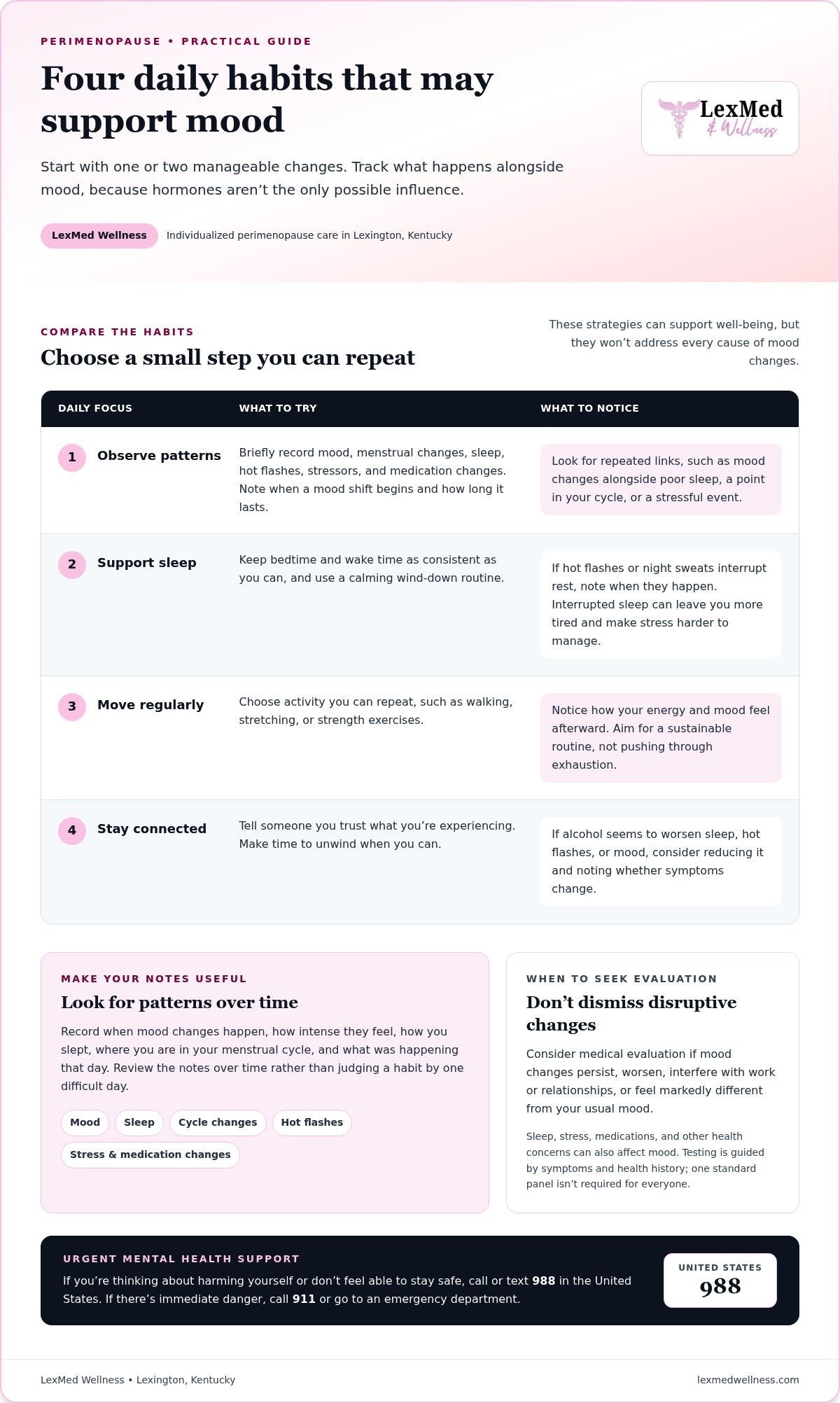
Start with one or two manageable habits instead of trying to change everything at once. As you try them, keep notes so you can tell whether a change seems helpful over time:
- 1. Observe patterns. Briefly record your mood, menstrual changes, sleep, hot flashes, stressors, and any medication changes. Note when a mood shift begins and how long it lasts. This can help reveal whether it tends to coincide with poor sleep, a particular point in your cycle, or a stressful event.
- 2. Support sleep. Keep bedtime and wake time as consistent as you can, and use a calming wind-down routine. If night sweats or hot flashes interrupt rest, note when they happen and explore menopause symptoms and relief strategies.
- 3. Move regularly. Choose activity you can repeat, such as walking, stretching, or strength exercises. Pay attention to how your energy and mood feel afterward. The aim is a sustainable routine, not pushing through exhaustion.
- 4. Stay connected. Tell someone you trust what you’re experiencing. If alcohol seems to worsen your sleep, hot flashes, or mood, consider reducing it and noting whether your symptoms change.
What to track before deciding whether a strategy is helping
Record when mood changes happen, how intense they feel, how you slept, where you are in your menstrual cycle, and what was happening that day. Review your notes over time rather than judging a new habit by one difficult day. Repeated patterns are usually more informative than a single entry.
When stress-management or mental health support may help
Breathing exercises, relaxation, and support from friends may help with everyday stress. If distress persists or disrupts daily life, those strategies may not be enough on their own. Counseling, including cognitive behavioral therapy, is one option to discuss. Lexington-area readers can learn about individualized perimenopause care at LexMed Wellness.
When perimenopause mood swings deserve a medical evaluation
Arrange an evaluation if mood changes persist, worsen, interfere with work or relationships, or feel markedly different from your usual mood. Learning how to improve mood swings during perimenopause also means recognizing when self-care isn’t enough and other causes or treatment options need consideration.
An assessment looks at the whole picture. There isn’t one lab panel or test required for everyone; testing is guided by symptoms, health history, and evaluation findings. This helps avoid assuming that every mood change has the same explanation.
What a provider may consider during an assessment
You may be asked when the mood changes began and how they relate to menstrual changes, sleep, and other symptoms. Changes in health or medications, as well as past or current mood concerns and other relevant risk factors, can also inform the assessment. If testing is indicated, the choice depends on the clinical picture rather than a universal panel.
LexMed Wellness provides individualized perimenopause care in Lexington, Kentucky. The evaluation takes symptoms, health history, medications, and personal goals into account.
When to seek urgent mental health support
If you’re thinking about harming yourself or don’t feel able to stay safe, seek help now. In the United States, call or text 988 for the Suicide & Crisis Lifeline. If there’s immediate danger, call 911 or go to an emergency department. You deserve support, and you don’t have to manage a crisis alone.
How treatment options are considered when mood changes continue
When mood changes continue, the next step depends on possible contributors and how symptoms affect daily life. Supportive habits may help with sleep, stress, and general well-being, but they may not be enough on their own. Counseling can address persistent distress, while a medical evaluation can look at perimenopause symptoms, medication effects, and other health factors. These approaches can complement one another.
There’s no single answer to how to improve mood swings during perimenopause. Treatment choices should reflect symptoms, health history, medications, risks, and personal goals. Hormone therapy isn’t a universal mood treatment, and improvement can’t be promised.
How hormone therapy fits into a broader care discussion
Hormone therapy may be discussed when symptoms such as hot flashes and night sweats are also part of the picture. Addressing those symptoms may help with sleep disruption for some people, but that doesn’t mean hormone therapy will resolve mood changes. Potential benefits and risks depend on personal health factors and treatment goals. Read more in this guide to hormone therapy for menopause.
A practical next step for Lexington-area readers
LexMed Wellness provides individualized, provider-led perimenopause care in Lexington, Kentucky. An evaluation considers symptoms, health history, medications, and personal goals, so mood changes can be considered alongside the rest of your health. The clinic is based in Lexington and serves patients from Lexington, Georgetown, Nicholasville, Louisville, Winchester, and Danville.
Take a steady, informed next step
Learning how to improve mood swings during perimenopause starts with noticing what may be influencing them. Hormonal changes can be part of the picture, but sleep disruption, stress, medications, and other health concerns may also affect mood. Tracking symptoms and trying realistic daily habits can help reveal patterns. Persistent or disruptive changes deserve a closer look.
There’s no single treatment that fits everyone. Supportive routines, mental health care, and medical evaluation serve different purposes. Hormone therapy may be part of a broader care discussion, but it isn’t a guaranteed solution for mood changes. Decisions are guided by symptoms, health history, risks, and personal goals.
LexMed Wellness is a Lexington, Kentucky wellness clinic owned and operated by Miranda Hagan, MSN, APRN, PMHNP-BC, FNP-C. The clinic provides individualized perimenopause and menopause care for patients in Lexington and Central Kentucky, including Georgetown, Nicholasville, Louisville, Winchester, and Danville. To explore care for mood changes during perimenopause, learn more about LexMed Wellness.
Frequently Asked Questions
Are mood swings a normal symptom of perimenopause?
Mood changes can occur during perimenopause, but they aren’t inevitable and don’t automatically mean hormones are the cause. Sleep disruption, stress, medications, and other health conditions can also contribute. Persistent or disruptive changes deserve attention rather than being dismissed as simply part of this transition.
How long do mood swings during perimenopause last?
There isn’t one set duration. Mood changes may come and go as menstrual patterns and other symptoms change during the transition to menopause. If they continue, worsen, or interfere with daily life, an evaluation can help explore possible contributors.
Can lifestyle changes help with perimenopause mood swings?
They may support emotional well-being, though they won’t address every cause or help everyone in the same way. Track mood alongside sleep, cycle changes, hot flashes, stress, and medication changes. Consistent sleep routines, regular movement, social connection, and noticing whether alcohol affects symptoms are practical starting points.
Can hormone therapy improve mood swings during perimenopause?
Hormone therapy isn’t a universal treatment for mood swings, and improvement can’t be guaranteed. It may be discussed when symptoms such as hot flashes or night sweats are also affecting sleep and well-being. The decision depends on symptoms, health history, risk factors, and goals.
When should I seek help for mood changes during perimenopause?
Seek an evaluation if mood changes persist, worsen, disrupt daily life or relationships, or feel unlike your usual mood. LexMed Wellness provides individualized perimenopause and menopause care in Lexington, Kentucky. If you’re thinking about self-harm or can’t stay safe, call or text 988 in the United States, or call 911 for immediate danger.