
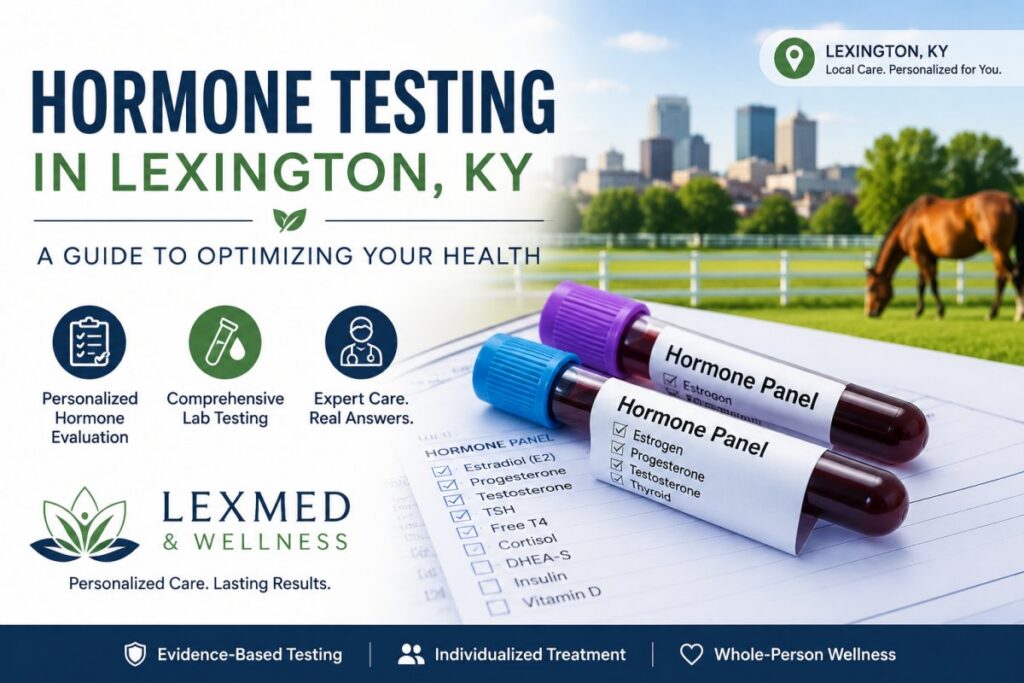
Understanding Your Hormone Test Results: Beyond the “Normal” Range
Hormone testing is a valuable tool used to measure the levels of key chemical messengers in your body, such as testosterone, estrogen, and thyroid hormones. For many people in Lexington, KY, it’s the first step toward understanding persistent symptoms that haven’t been resolved through conventional check-ups. You may have even had basic lab work done before, only to be told everything is “normal,” even though you don’t feel like yourself.
This experience is common and can be frustrating. Standard laboratory “reference ranges” are based on broad population averages and are primarily designed to detect outright disease. However, a result that falls within this wide range doesn’t always represent the ideal level for your individual health. Your age, sex, medical history, and specific symptoms all provide critical context. A level that is normal for a large group may not be right for you.
At LexMed & Wellness, we believe that your symptoms are valid. Our approach to hormone testing in Lexington involves a detailed interpretation of your lab results in the context of a comprehensive clinical evaluation. We partner with you to understand the complete picture, moving beyond a simple “normal” or “abnormal” label to determine what’s happening in your body.
Symptoms That May Suggest a Hormonal Imbalance
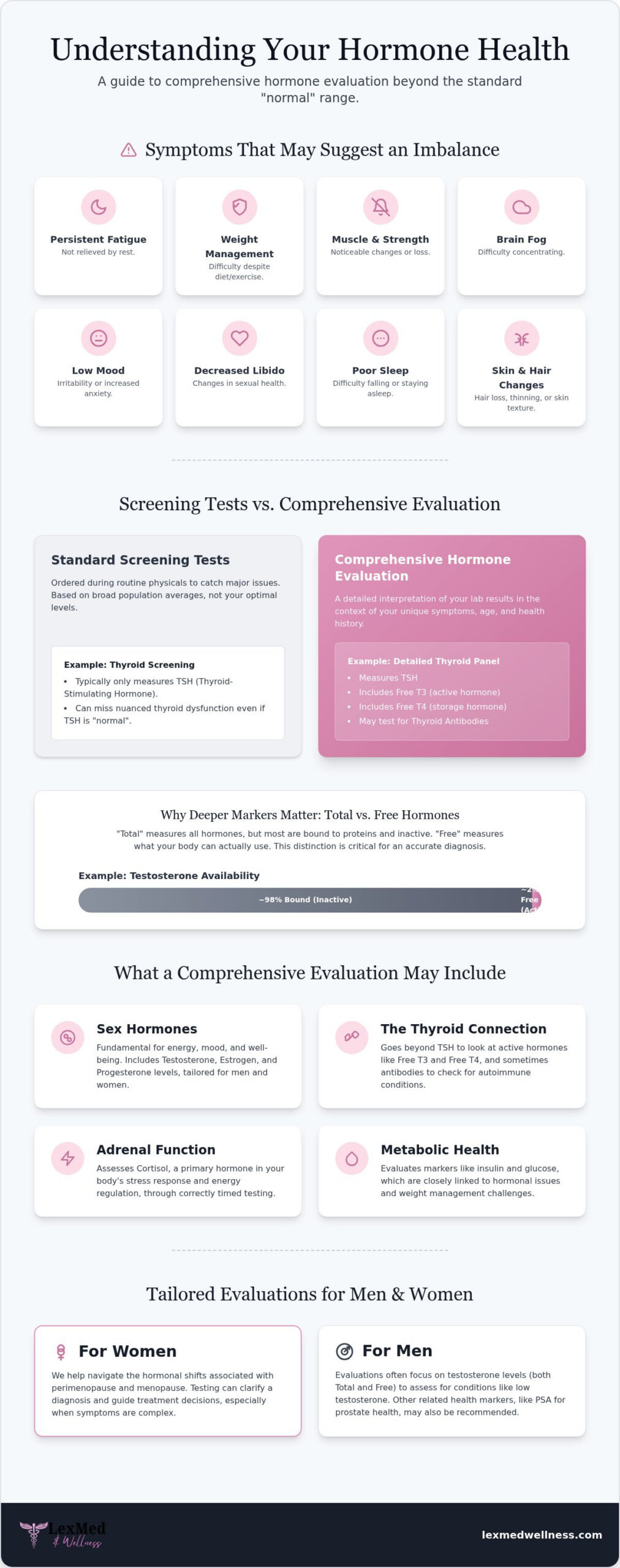
If you are experiencing persistent and unexplained symptoms, a closer look at your hormone health may be warranted. While these symptoms can have many different causes, they often prompt a more detailed hormone evaluation. Common concerns include:
- Persistent fatigue that isn’t relieved by rest
- Difficulty managing weight despite consistent diet and exercise
- Noticeable changes in muscle mass or strength
- Brain fog, difficulty concentrating, or memory issues
- Low mood, irritability, or increased anxiety
- Decreased libido or other changes in sexual health
- Poor sleep quality, including difficulty falling or staying asleep
- Changes in skin texture, hair loss, or thinning
Screening Tests vs. a Comprehensive Hormone Evaluation
The blood work ordered during a routine physical is often a screening panel, designed to catch major health issues. For example, a doctor might only order a Thyroid-Stimulating Hormone (TSH) test to screen for thyroid problems. While useful, this single marker may not provide a full picture of your thyroid function.
A comprehensive hormone evaluation is more detailed. Depending on your situation, it may involve looking at a wider array of markers, including “free” and “total” hormone levels. “Total” testosterone, for instance, measures all the testosterone in your blood, but much of it is bound to proteins and unavailable for your body to use. “Free” testosterone measures the portion that is active and available to your cells. Examining these nuances helps provide a more accurate understanding of your hormonal status.
What a Comprehensive Hormone Evaluation May Include
Because every patient is unique, the specific tests included in a hormone panel are tailored to your individual symptoms and health goals. A thorough evaluation at our Lexington clinic is not a one-size-fits-all process. Instead, we select the appropriate tests to investigate your concerns effectively. Panels may include:
- Sex Hormones: Evaluating levels of testosterone, estrogen, and progesterone is fundamental to understanding your energy, mood, and overall well-being. An imbalance in these hormones can affect men and women differently at various stages of life.
- The Thyroid Connection: While TSH is the standard screening test, persistent symptoms may call for a deeper look at active thyroid hormones like Free T3 and Free T4. In some cases, testing for thyroid antibodies is also necessary to assess for autoimmune conditions.
- Adrenal Function: Cortisol is a primary hormone involved in your body’s stress response and energy regulation. Its levels fluctuate throughout the day, and testing must be timed correctly to provide useful information. A clinician will determine if cortisol testing is appropriate for your situation.
- Metabolic Health Indicators: Hormones do not work in isolation. Markers like insulin and glucose are often evaluated to assess your metabolic health, as imbalances here can be closely linked to hormonal issues and challenges with weight management. This information is a key part of developing a successful medical weight loss strategy.
Tailored Evaluations for Men and Women
Hormone health needs differ significantly between men and women, and our testing protocols reflect that. We provide targeted hormone blood tests to address specific concerns.
- For Men: Evaluations often focus on testosterone levels (both total and free) to assess for conditions like low testosterone. We may also recommend other health markers, such as a Prostate-Specific Antigen (PSA) test, which is an important screening tool for prostate health, not a hormone test itself.
- For Women: We help navigate the hormonal shifts associated with perimenopause and menopause. While menopause is often diagnosed based on age and symptoms, menopause hormone evaluation can be a valuable tool in certain situations to clarify a diagnosis or guide treatment decisions, particularly when symptoms are complex.
Advanced and Related Markers
In certain clinical situations, a more advanced evaluation may be beneficial. For example, if a patient is considering a specialized treatment like peptide therapy, a clinician may assess other markers, such as Insulin-like Growth Factor 1 (IGF-1), to ensure the therapy is appropriate and to monitor its progress. These tests are not routine for every patient but are used selectively based on specific therapeutic goals.
Our Hormone Testing Process: A Step-by-Step Guide
We’ve designed our process to be clear, straightforward, and supportive. From your first conversation to your follow-up plan, we ensure you feel informed and empowered.
- The Initial Consultation: Your journey begins with a thorough discussion with one of our clinicians. We’ll review your medical history, listen to your symptoms, and understand your health goals. This conversation allows us to determine which hormone blood tests are most appropriate for you.
- Sample Collection: Your blood draw is performed conveniently and professionally here at our Lexington clinic. We strive to make the experience as comfortable and efficient as possible.
- Laboratory Analysis: Your samples are sent to a fully accredited and certified laboratory for processing. These facilities use precise technology to ensure the accuracy and reliability of your results.
- The In-Depth Review: This is the most important step. You will have a dedicated, one-on-one session with our clinician to review your lab report. We don’t just give you numbers; we translate the data into meaningful insights about your health. Together, we’ll discuss what the results mean for you and map out potential next steps.
How to Prepare for Your Hormone Blood Work
Proper preparation is key to accurate test results. However, instructions can vary significantly depending on the specific tests ordered. Some panels may require you to fast for 8-12 hours, while others do not. The timing of your blood draw can also be important; for example, testosterone levels are often highest in the morning.
You will receive specific, personalized instructions from our clinic before your appointment. It is very important that you do not stop taking any prescribed medications or supplements unless you have been explicitly told to do so by your healthcare provider. Please be sure to inform us of all medications and supplements you are currently taking.
Interpreting Your Results with a Highly Credentialed Guide
Receiving a lab report from an online portal can leave you with more questions than answers. At LexMed & Wellness, we believe that data without expert interpretation is incomplete. Miranda Hagan, MSN, APRN, and our clinical team have the expertise to see beyond the numbers. We connect your lab results to your lived experience, helping you move from asking, “What is wrong?” to understanding, “What can we do about it?”
Why Choose LexMed & Wellness for Your Hormone Evaluation?
When you need clear answers about your health, choosing the right partner is essential. LexMed & Wellness offers a focused, patient-centered environment for residents of Lexington, Nicholasville, Georgetown, and the surrounding Central Kentucky communities. We provide a level of care and attention that sets us apart.
- A Personal Approach: We offer unhurried consultations in a private setting. You are more than a number on a chart; you are an individual whose story matters. We listen carefully to ensure we understand your concerns fully.
- Expert Clinical Guidance: Led by Miranda Hagan, MSN, APRN, our clinic combines expertise in both family practice and psychiatric health. This provides a holistic perspective on how hormonal health impacts both physical and emotional well-being.
- An Integrated Path to Wellness: Hormone testing is just the beginning. If your results and symptoms indicate that treatment is a good option, we can create and manage your care plan right here. This seamless integration ensures continuity from diagnosis to ongoing management of services like hormone replacement therapy.
A Partnership for Your Long-Term Health
Achieving better hormonal health is a journey, not a destination. We are committed to being your long-term partner in that process. Our approach includes careful monitoring and follow-up testing to ensure your treatment plan remains effective and aligned with your goals. We believe in transparent communication and collaborative decision-making every step of the way.
If you’re ready to move beyond guesswork and get a clear, actionable plan for your health, we invite you to schedule a consultation. Contact LexMed & Wellness today to begin your journey toward better balance and well-being.
Frequently Asked Questions About Hormone Testing
Do I need a referral for hormone testing at LexMed & Wellness?
A referral is generally not required to schedule a consultation with us. You can contact our office directly to book an appointment to discuss your symptoms and determine if hormone testing is right for you.
How long does it take to get my hormone lab results back?
While turnaround times can vary depending on the specific tests ordered, most results are available within 7 to 10 business days. We will notify you as soon as your results have been received and are ready for review.
Will my insurance cover the cost of hormone testing in Lexington?
Insurance coverage for hormone testing varies widely between plans and providers. We recommend contacting your insurance company directly to inquire about your specific coverage. Our staff can provide you with the necessary billing codes to facilitate that conversation.
How often should I have my hormone levels tested once I start treatment?
The frequency of follow-up testing depends on your individual treatment plan and clinical progress. Typically, we will re-evaluate your levels a few months after starting a new therapy and then periodically, such as annually, once your levels are stable and your symptoms have improved.
Can hormone testing help with my weight loss journey?
Hormonal imbalances, such as those involving thyroid hormones, cortisol, or insulin, can make weight loss more difficult. While hormone testing is not a weight loss tool on its own, it can identify underlying factors that may be hindering your progress. These findings can then be used to create a more effective, comprehensive medical weight loss plan.