

For many women in Central Kentucky, the years leading up to and following menopause can bring a host of confusing and frustrating symptoms. Persistent fatigue, brain fog, mood shifts, and sleep disturbances are often dismissed as inevitable parts of aging. While these changes are common, they are not something you simply have to endure. Understanding the role of hormonal shifts and learning about available support can be the first step toward feeling more like yourself again.
What Causes Hormonal Changes During Perimenopause and Menopause?
The transition into menopause is a natural biological process, but it involves significant shifts in your body’s primary female hormones: estrogen and progesterone. These hormones regulate much more than just the menstrual cycle; they influence your mood, energy, bone density, cognitive function, and more.
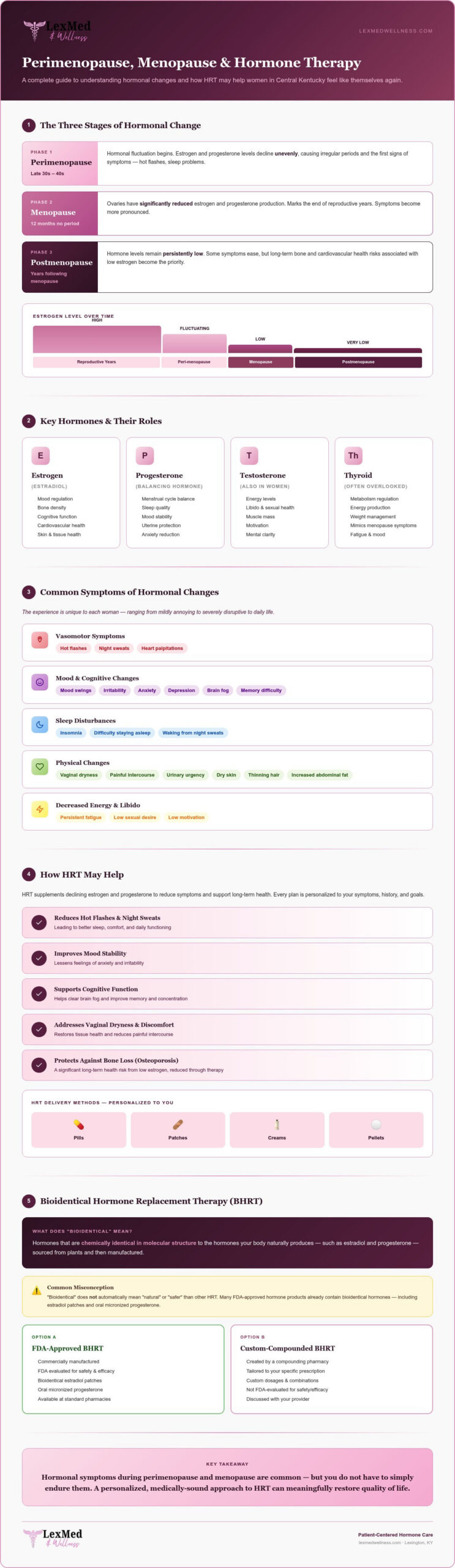
- Perimenopause: This phase can begin in a woman’s late 30s or 40s and marks the beginning of hormonal fluctuation. Estrogen and progesterone levels start to decline unevenly, leading to irregular periods and the first appearance of symptoms like hot flashes or sleep problems.
- Menopause: Defined as 12 consecutive months without a menstrual period, menopause signifies the end of the reproductive years. At this stage, the ovaries have significantly reduced their production of estrogen and progesterone, causing symptoms to become more pronounced.
- Postmenopause: In the years following menopause, hormone levels remain low. While some symptoms like hot flashes may lessen over time, long-term health considerations related to low estrogen, such as bone and cardiovascular health, become more important.
Beyond the Basics: Testosterone and Thyroid Hormones
While estrogen and progesterone are the primary focus of menopause-related care, other hormones also play a crucial role in a woman’s overall well-being. Testosterone, often considered a male hormone, is also present in women and contributes to energy, libido, and muscle mass. Thyroid hormones regulate metabolism, and imbalances can cause symptoms that overlap with those of menopause, such as fatigue and weight changes. A comprehensive evaluation will consider this broader hormonal picture.
Common Symptoms of Hormonal Changes
The experience of menopause is unique to each woman, but many symptoms are widely shared. These are often the result of declining estrogen and progesterone levels and can range from mildly annoying to severely disruptive to daily life.
Common symptoms include:
- Vasomotor Symptoms: Hot flashes, night sweats, and heart palpitations.
- Mood and Cognitive Changes: Mood swings, irritability, anxiety, depression, and "brain fog" or difficulty with memory and concentration.
- Sleep Disturbances: Insomnia or difficulty staying asleep, often exacerbated by night sweats.
- Physical Changes: Vaginal dryness, painful intercourse, urinary urgency, dry skin, thinning hair, and changes in body composition, such as increased abdominal fat.
- Decreased Energy and Libido: A persistent feeling of fatigue and a noticeable drop in sexual desire. For many, this can be addressed through a careful approach to fatigue and hormone therapy.
How Hormone Replacement Therapy May Help
Hormone Replacement Therapy (HRT) is a medical treatment designed to supplement the hormones that decline during perimenopause and menopause. The primary goal of HRT is to help manage the symptoms caused by this hormonal shift, improving quality of life and supporting long-term health. By reintroducing estrogen and, in many cases, progesterone, HRT can help reduce the frequency and intensity of many menopausal symptoms.
For many women, a well-managed HRT plan may help:
- Reduce hot flashes and night sweats, leading to better sleep and comfort.
- Improve mood stability and lessen feelings of anxiety or irritability.
- Support cognitive function, helping to clear brain fog.
- Address vaginal dryness and discomfort.
- Protect against bone loss (osteoporosis), a significant long-term health risk associated with low estrogen.
It’s important to understand that HRT is a personalized medical treatment. The type of hormones, dosage, and method of delivery (pills, patches, creams, or pellets) are tailored to your specific symptoms, health history, and goals.
Bioidentical Hormones: What Does “Bioidentical” Mean?
As you explore hormone therapy for women in Lexington, KY, you will likely encounter the term "bioidentical hormone replacement therapy" (BHRT). The term "bioidentical" means the hormones in the product are chemically identical in molecular structure to the ones your body produces naturally.
These hormones, such as estradiol (the main form of estrogen) and progesterone, can be sourced from plants and then manufactured. It’s a common misconception that "bioidentical" automatically means "natural" or "safer" than other forms of HRT. Many FDA-approved hormone products contain bioidentical hormones. For example, estradiol patches and oral micronized progesterone are both bioidentical and available through standard pharmacies.
Custom-Compounded BHRT
Another option is custom-compounded BHRT. A compounding pharmacy can create a hormone preparation specifically for you based on a provider’s prescription. This allows for customized dosages and combinations that may not be available in mass-produced products. While this personalization can be beneficial for some patients, it’s important to note that compounded hormones are not evaluated by the FDA for safety and efficacy in the same way commercially available drugs are. The decision to use FDA-approved or compounded hormones is a key part of the conversation you will have with your healthcare provider. For more details, our guide to bioidentical hormones in Lexington offers further information.
What to Consider Before Starting HRT
Deciding to start hormone therapy is a significant healthcare choice that requires a thorough discussion with a qualified provider. A "one-size-fits-all" approach is not appropriate for hormonal health. A high-quality women’s health clinic will prioritize a personalized, evidence-based process.
Key Considerations Include:
- Your Personal and Family Medical History: A provider needs to understand your risk factors for conditions like breast cancer, heart disease, stroke, and blood clots.
- The Timing of Treatment: Current evidence suggests that for many women, the benefits of starting HRT are most likely to outweigh the risks when initiated within 10 years of menopause or before the age of 60.
- Your Specific Symptoms: The type and severity of your symptoms will guide the treatment plan. The goal is to use the appropriate dose to achieve symptom relief.
- The Importance of Ongoing Monitoring: Hormonal needs can change over time. Regular follow-up appointments and lab work are essential to ensure your treatment plan remains appropriate and effective.
What to Expect at a Hormone Therapy Consultation in Lexington
Beginning the journey toward hormonal balance should be a supportive and collaborative process. At a specialized clinic like LexMed & Wellness, the focus is on you as an individual, not just a set of lab numbers.
Here’s what a typical path to care involves:
- The Initial Consultation: This is a comprehensive discussion with a provider like Miranda Hagan, MSN, APRN. It’s an opportunity to share your symptoms, health history, lifestyle, and what you hope to achieve. This conversation goes beyond a standard check-up to understand the full context of your well-being.
- Comprehensive Lab Testing: To get a clear picture of your hormonal status, detailed blood work is necessary. This establishes a baseline and helps identify specific imbalances in estrogen, progesterone, testosterone, and other relevant markers. Understanding this process is key, and you can learn more about hormone testing and treatment in Lexington here.
- Developing a Personalized Plan: Based on your consultation and lab results, your provider will develop a tailored treatment plan. This includes recommendations for the type of hormones, dosage, and delivery method, and may also include nutritional advice, supplements, or other supportive therapies like peptide therapy.
- Follow-Up and Adjustments: Your journey doesn’t end after the first prescription. Follow-up appointments are scheduled to monitor your progress, review follow-up labs, and make any necessary adjustments to your plan. This ensures your treatment continues to align with your body’s needs.
If you’re ready to take the next step, our team is here to provide expert guidance in a supportive, unhurried environment. We serve women throughout Lexington, Georgetown, Nicholasville, and Central Kentucky who are seeking a dedicated partner in their long-term health.
**Schedule Your Personalized Hormone Consultation at LexMed & Wellness Today **
Frequently Asked Questions About Women’s Hormone Therapy
Is hormone replacement therapy safe for women over 50?
The safety of HRT is highly individualized. For many healthy women experiencing bothersome menopausal symptoms, starting HRT around the age of 50 or within 10 years of their last period is considered to have benefits that outweigh the potential risks. However, safety depends on factors like your personal and family medical history, the type and dose of hormones used, and how long you continue treatment. A thorough evaluation with a healthcare provider is essential to determine if HRT is an appropriate and safe option for you.
How long does it take to see results from hormone therapy?
Some women notice improvements in symptoms like hot flashes and sleep within a few weeks of starting treatment. Other benefits, such as improved mood or cognitive function, may take a few months to become apparent. Your provider will work with you to monitor your response and adjust your treatment as needed to help you achieve the best possible results.
What is the difference between bioidentical and synthetic hormones?
Bioidentical hormones have a molecular structure that is identical to the hormones produced by the human body. Synthetic hormones have a slightly different structure. Both can be effective for treating menopausal symptoms. The choice between them depends on the individual patient’s needs, medical history, and a collaborative decision with their provider.
Do I need a referral to visit a hormone clinic in Lexington?
Most specialized wellness clinics, including LexMed & Wellness, do not require a referral from a primary care physician. You can typically schedule a consultation directly to discuss your symptoms and explore your treatment options.
Will hormone therapy help with weight loss and metabolism?
Hormone replacement therapy is not a weight-loss treatment. However, the hormonal changes of menopause can affect body composition, often leading to an increase in abdominal fat and a decrease in muscle mass. By helping to rebalance hormones, HRT may support your efforts to manage your weight when combined with a healthy diet and regular exercise. For those seeking dedicated support, programs for medical weight loss for women in Lexington can be an effective complementary approach.