

Vaginal dryness, painful sex, decreased desire, poor sleep, and mood shifts can all affect intimacy during menopause. These changes are common and frustrating, but they don’t mean attraction or connection is gone. Learning how to regain intimacy during menopause starts with identifying your primary concern, because that guides practical steps and personalized treatment.
Dryness or pain, disrupted sleep, stress, mood changes, medications, and relationship dynamics can all play a part. A useful plan might include practical steps such as trying a lubricant, talking openly with your partner, or discussing persistent symptoms and treatment options with a healthcare professional. What helps depends on your symptoms, health history, and goals.
LexMed Wellness in Lexington, KY, offers menopause and perimenopause care in Lexington. This guide covers why intimacy can change, practical ways to support comfort and connection, and when medical guidance may help patients across Central Kentucky.
Key Takeaways
- To learn how to regain intimacy during menopause, first identify whether the main concern is comfort, desire, affection, or communication.
- Vaginal moisturizers and lubricants serve different purposes. Choosing between them depends on when dryness or discomfort occurs.
- Persistent pain, dryness, bleeding, or distress deserves individualized medical evaluation rather than guesswork.
- Menopause treatments differ: local vaginal options address specific tissue symptoms, while systemic hormone therapy has broader effects and requires a personalized risk-benefit discussion.
How to regain intimacy during menopause starts with identifying what changed
Intimacy can change during menopause, but neither the cause nor the most helpful response is the same for everyone. It includes more than sexual activity: comfort, desire, affection, communication, and emotional closeness all matter. To work out how to regain intimacy during menopause, start by naming what feels different rather than assuming one explanation. Menopause-related shifts may be part of the picture, but stress, sleep disruption, medications, health conditions, and relationship concerns can also affect intimacy.
Menopause can involve changes in vaginal and urinary tissues, as well as symptoms such as mood changes. The U.S. Office on Women’s Health overview of menopause describes changes people may experience. Related symptoms like hot flashes and disrupted sleep, can also reduce energy for closeness.
Which changes are affecting intimacy?
Try to distinguish the main concern, even if more than one applies. Lower desire isn’t the same as pain, and reduced comfort doesn’t mean desire or affection has disappeared. Naming the difference can make it easier to discuss what kind of support might help.
- Discomfort: Dryness, irritation, or pain during sexual activity.
- Lower interest: Less frequent desire or less interest in initiating intimacy.
- Arousal changes: More difficulty becoming physically or mentally engaged.
- Relationship concerns: Tension, mismatched expectations, or feeling less emotionally connected.
Several changes can overlap, and none is inevitable or inherently abnormal. Noticing when a change began, what seems to trigger it, and how it affects closeness can give you and your healthcare provider a clearer starting point.
Why menopause can affect sexual comfort, desire, and closeness
Shifts in estrogen can change the tissues of the vagina and urinary tract, sometimes contributing to dryness, irritation, pain with penetration, or urinary symptoms. These effects can make sexual activity less comfortable, but they don’t explain every change in desire or closeness. Menopause-related intimacy concerns often have several contributors, and identifying them separately can point toward more useful support.
When vaginal changes may be part of the picture
Genitourinary syndrome of menopause (GSM) is the term for genital, sexual, and urinary symptoms associated with hormone changes around menopause. Symptoms may include vaginal dryness, burning, discomfort with sex, or urinary urgency. The U.S. Office on Women’s Health describes these effects in its overview of Menopause and Sexuality. Ongoing dryness or pain deserves attention, not endurance. These symptoms can have other causes, too, so they don’t by themselves prove a hormone deficiency.
Why desire may change for reasons beyond menopause
Desire doesn’t have one universal baseline, and a single hormone level can’t capture the whole experience. Pain may lead someone to avoid sex; poor sleep or hot flashes can leave less energy for connection. Stress, mood changes, some medications, health conditions, and relationship dynamics can also influence interest or arousal. A change in one area can affect another, creating a pattern that’s hard to untangle without looking at timing and context.
As you consider how to regain intimacy during menopause, notice whether discomfort, fatigue, mood, medication changes, or relationship strain seems most connected to the shift. Persistent symptoms are worth discussing in an evaluation rather than assuming menopause is the only cause.
Practical ways to rebuild comfort and connection during menopause
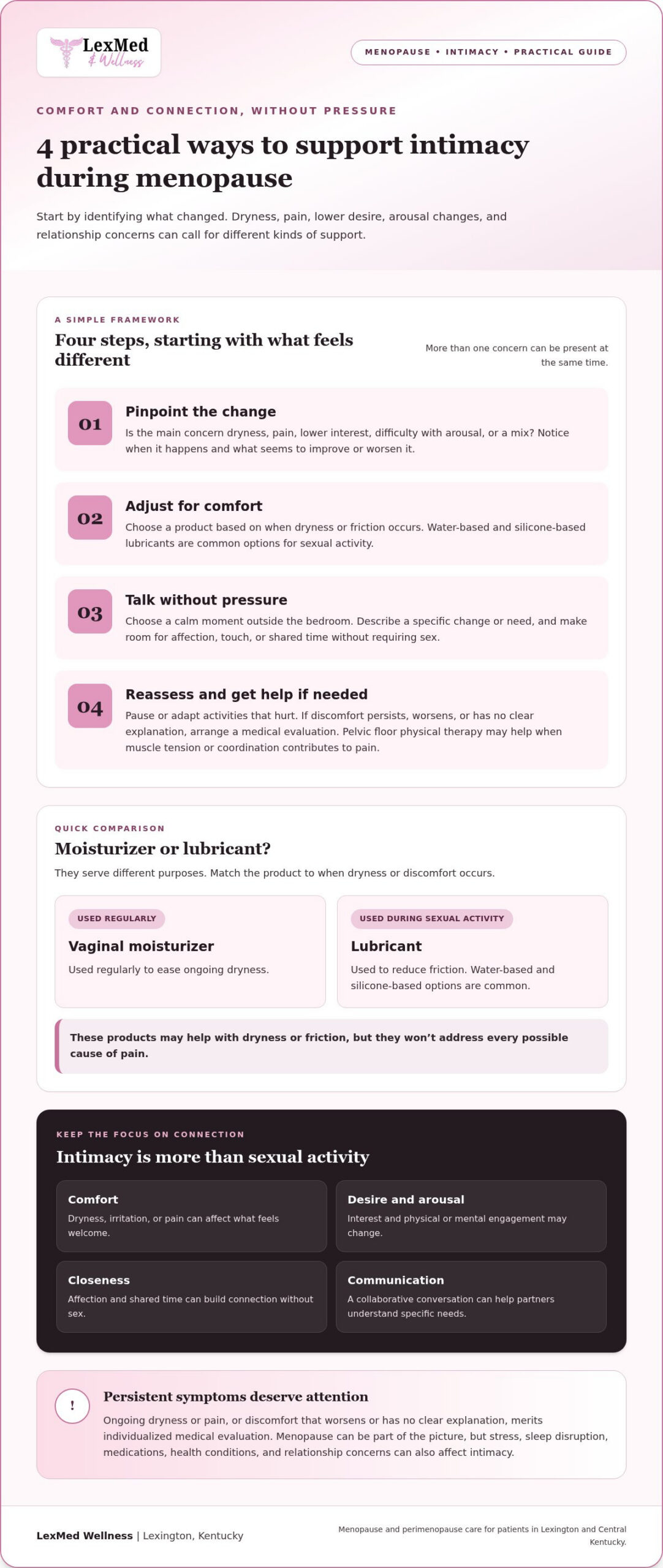
A manageable plan starts by identifying the main concern, making comfort a priority, talking with your partner, and noticing what changes help. The aim isn’t to meet a performance goal. It’s to find ways of being close that feel comfortable and welcome to both of you.
- Pinpoint what feels different. Note whether the main issue is dryness, pain, lower interest, difficulty with arousal, or a mix. Consider when it happens and what seems to make it better or worse.
- Adjust for comfort. Vaginal moisturizers are used regularly to ease ongoing dryness; lubricants are used during sexual activity to reduce friction. Water-based and silicone-based lubricants are common options. These products may help with dryness or friction, but they won’t address every possible cause of pain.
- Talk without pressure. Choose a calm moment outside the bedroom to describe a specific change or need. For example, you might say, “I want to feel close, but penetration has been uncomfortable. Can we slow down and try something else?” Affection, touch, or shared time can build closeness without requiring sex.
- Reassess and seek help if needed. Pause or adapt activities that hurt rather than pushing through. If discomfort persists, worsens, or has no clear explanation, arrange a medical evaluation. Pelvic floor physical therapy may help some people when muscle tension or coordination contributes to pain.
Talk about intimacy without pressure
Keep the conversation collaborative: describe what you’re experiencing, ask what feels good to your partner, and agree that either person can pause. This makes room for curiosity and connection instead of blame or an expectation that intimacy must follow a set script.
Make comfort a priority
Notice whether a lubricant or regular moisturizer changes your comfort, and share that information during an appointment if symptoms continue.
When menopause care may help you find the right treatment options
Persistent vaginal dryness or pain, bleeding after menopause, or distress that affects daily life or a relationship is a good reason to seek individualized medical evaluation. Bleeding deserves particular attention rather than being assumed to be a menopause symptom. Treatment depends on what’s causing the concern, your health history, and what you want to improve.
How menopause-related intimacy concerns are assessed
An evaluation typically begins with your symptom history: when changes started, what makes them better or worse, and how they affect intimacy. The discussion may also cover medications, health conditions, personal and family risk factors, and treatment goals. An examination or testing depends on the clinical question; there isn’t one hormone panel that everyone needs. At LexMed Wellness, care is individualized and provider-led.
Compare options without assuming one solution fits everyone
For dryness or discomfort limited to vaginal and urinary tissues, nonhormonal moisturizers and lubricants may help. If symptoms persist, local vaginal treatments, including low-dose vaginal estrogen for some patients, can be discussed. These differ from systemic hormone therapy, which circulates through the body and may be used for symptoms such as hot flashes. Each option has potential risks and isn’t suitable for everyone; medical history and preferences guide the decision. Learn more about menopause hormone therapy.
Hormone therapy isn’t a universal fix for low desire. Desire may be affected by pain, sleep, mood, medications, health conditions, and relationship context, so treatment decisions should account for the likely contributors. A provider-led discussion can help clarify which options fit your symptoms.
Let connection take shape at your pace
There’s no deadline for intimacy to look a certain way, and progress doesn’t have to mean returning to an old routine. A more useful measure is whether closeness feels safer, more comfortable, and more mutual over time. Let your needs change as you learn what supports your well-being, and bring persistent concerns into a conversation where your health history and preferences can guide care.
Your provider is Miranda Hagan, APRN, PMHNP-BC, FNP-C, who offers care for mood changes during menopause.
Frequently Asked Questions
Can intimacy improve after menopause?
Yes. The changes that help are different for each person, and there’s no age-related deadline for wanting or enjoying closeness. If sexual activity has become uncomfortable, redefining intimacy for a time may ease pressure while you seek support. Progress might mean feeling more at ease with touch, communicating needs more openly, or finding a form of sexual activity that feels comfortable.
Does hormone therapy always improve sexual desire?
No. Hormone therapy doesn’t reliably increase desire for everyone, and it isn’t a universal treatment for low libido. Its effects depend on the symptoms being treated and the person’s health profile. Easing disruptive menopause symptoms may indirectly support interest, while treatment aimed at vaginal symptoms may address comfort rather than desire. A change in libido can have several contributors, so treatment goals matter.
What happens if I have bleeding after sex following menopause?
Bleeding after sex after menopause should be medically evaluated, even if it’s light or happens only once. Possible causes range from tissue irritation to conditions that need specific treatment, and the amount of bleeding alone can’t identify the cause. Note when it occurred and any accompanying symptoms, then arrange an assessment. Heavy bleeding, severe pain, dizziness, or feeling faint warrants urgent medical attention.
Can medications or health conditions affect intimacy during menopause?
Yes. Some antidepressants, blood pressure medicines, and other prescriptions can affect arousal, orgasm, or desire; diabetes and thyroid disorders can also contribute to sexual changes. Timing can offer a useful clue, such as a change beginning after a new medication or dose adjustment. Don’t stop or alter prescribed medication on your own. A prescriber can review possible side effects and alternatives in light of your health needs.
Is painful sex always caused by vaginal dryness?
No. Pain can also relate to pelvic floor muscle tension, skin irritation, infection, or other pelvic conditions. Where the pain occurs can help guide assessment: discomfort at the vaginal opening may have different causes than deep pelvic pain. Describe the location, sensation, and whether pain occurs during or after sex. That detail can help a healthcare professional decide what examination or follow-up is useful.
Changes in intimacy deserve attention. LexMed Wellness offers personalized menopause and perimenopause care in Lexington, KY. Schedule an evaluation to discuss vaginal dryness, discomfort, changes in desire, and your treatment options.